
How Much Should I Save Before Buying a Home in Colorado?

How much should I save before buying a home in Colorado? For most buyers on the Front Range, the honest answer is somewhere between $30,000 and $150,000 depending on the loan program, the home price, and how aggressive you want to be on the down payment. That spread is wide on purpose. Colorado buyers have more paths to homeownership than most people realize. The team at JROC Properties helps buyers figure out the right number for their situation, not a generic rule of thumb.
This guide breaks down what you’re actually saving for, what each loan type requires, the Colorado programs that can cut the number down, and how to hit your target faster.
Not sure what your number should be?
The JROC Properties team can run your specific savings target based on price range, loan type, and timeline. → Book a quick call
TL;DR
Most Colorado buyers need to save between $30,000 and $80,000 before closing on a median-priced Front Range home. The number depends heavily on loan type. A VA loan can bring you in with almost nothing down; a 20% conventional loan on a $585,000 Denver-area home runs north of $140,000 all in. Down payment is the biggest slice, but closing costs (2 to 3% of price) and cash reserves (2 to 6 months of payments) quietly add tens of thousands more. Colorado’s CHFA programs can cut the total by $10,000 to $20,000 for buyers who qualify.
Key Points
- Median Colorado home sits around $585,000 in spring 2026.
- Total savings target for most first-time buyers runs $45,000 to $75,000, not just a down payment.
- Down payment minimums range from 0% (VA/USDA) to 20% (conventional, no PMI).
- Closing costs typically run 2 to 3% of purchase price in Colorado.
- Cash reserves of 2 to 6 months of housing payments are expected by lenders.
- CHFA down payment assistance can reduce out-of-pocket cash by up to $20,000.
- The 20% down myth has held back thousands of qualified Colorado buyers.
Table of Contents

The Short Answer: What Colorado Buyers Actually Need
Here’s the honest math. Colorado’s median single-family home price is hovering around $585,000 in spring 2026, with Denver metro slightly higher and smaller Front Range cities like Longmont or Pueblo notably lower. On that median price, a savings target looks like this:
- 20% down conventional: ~$145,000 all in. Covers $117,000 down, $15,000 closing, $13,000 reserves.
- 10% down conventional: ~$87,000 all in.
- 5% down conventional: ~$58,000 all in.
- 3.5% FHA (first-time): ~$45,000 all in.
- 0% VA loan (eligible vets): ~$25,000 all in. Mostly closing + reserves.
The number that actually matters is not the one you see on Zillow. It’s the one your lender sees when they review your bank statements. Most Colorado buyers underestimate closing costs and reserves by $15,000 to $25,000, which is where the surprise comes from at the closing table.
The numbers tell a simple story. The median age is low, the sun shows up most days of the year, and the Walk Score in the core is genuinely walkable-first. The trade-off is rent. Boulder is expensive for Colorado because the supply is tightly zoned and demand from CU, from tech employers, and from remote workers keeps the pressure on.
One more thing shapes where young adults land. Boulder is cut by a rough north-south divide. North of Pearl you get more creative and residential energy. South of Baseline you get better value, mid-century homes, and faster access to the south Boulder trails. Central Boulder, the stretch around CU and Pearl, is the high-energy corridor. Each of those three zones attracts a different kind of young adult.
What You’re Actually Saving For
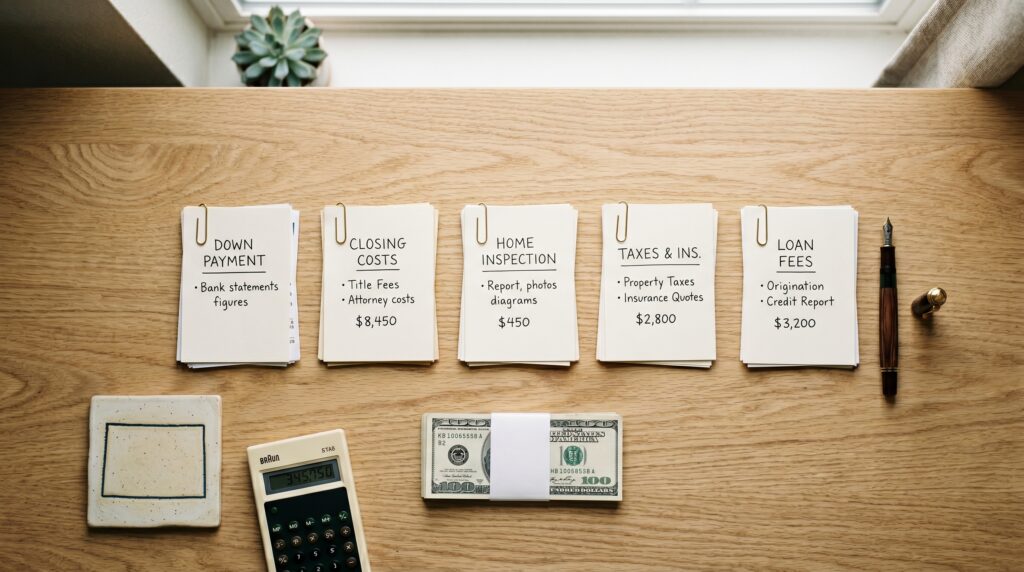
Most buyers only think about the down payment. The reality is you’re saving for five separate buckets, and the big three (down payment, closing, reserves) account for roughly 94% of what hits your account between contract and move-in.
Colorado Home Savings · Where It Goes
What you're actually saving for
A typical Colorado first-time buyer savings breakdown for a median-priced home. Down payment is the biggest slice, but it's only one of five.
The down payment gets the attention. The other 40% is where most first-time buyers run short.
Sources: CFPB, CHFA, JROC Properties
The chart above reflects a typical Colorado first-time buyer savings breakdown for a median-priced home. The down payment is the dominant slice, but the next three together (closing, reserves, moving) can easily clear $30,000. Inspections and appraisal are small but non-optional, running roughly $500 to $1,500 out of pocket before you ever see a closing disclosure.
If you’ve been told to save “20% for a house,” that rule of thumb ignores four of the five slices and loads everything onto the biggest one. The real savings question is about hitting all five, not maxing out the first.
Down Payment Reality by Loan Type
Colorado buyers qualify for more loan programs than most assume. Here’s what each one actually requires in dollars, run against that same $585,000 median price point.
Conventional Loans
The default for buyers with good credit. First-time buyers qualify for 3% down conventional through Fannie Mae HomeReady or Freddie Mac Home Possible. Standard conventional is 5%. The full 20% down is only necessary if you want to skip private mortgage insurance (PMI). On a $585,000 Colorado home, that’s the difference between a $17,550 down payment (3%) and $117,000 (20%).
FHA Loans
Backed by the Federal Housing Administration, FHA loans allow 3.5% down with credit scores as low as 580. On a $585,000 home, that’s about $20,475 down. FHA is popular in Colorado because it’s flexible on credit and debt-to-income ratios, but it does require ongoing mortgage insurance regardless of down payment size.
VA Loans
If you’re an eligible veteran, active-duty service member, or surviving spouse, the VA home loan program is the most buyer-friendly product in the country. Zero down payment, no PMI, competitive rates. You’ll still need closing costs and reserves, but the down payment is $0. Colorado has a high concentration of veterans, and assumable VA loans are an underused way to get into a home at a previously locked-in low rate.
USDA Loans
USDA rural development loans offer 0% down in designated rural areas. Much of eastern and southern Colorado qualifies, plus smaller towns in the mountains. Income limits apply. For buyers willing to live outside the Denver metro, USDA is a legitimate path to zero-down ownership.
Here’s how the down payment alone compares across loan types.
| Loan Type | Min Down % | On $585K Home | Best For |
|---|---|---|---|
| Conventional (FTHB) | 3% | $17,550 | Strong credit, first-time |
| Conventional (std) | 5% | $29,250 | Repeat buyers |
| Conventional (no PMI) | 20% | $117,000 | Skip mortgage insurance |
| FHA | 3.5% | $20,475 | Lower credit (580+) |
| VA | 0% | $0 | Eligible veterans |
| USDA | 0% | $0 | Rural Colorado only |
Our guide on Colorado home loans walks through each of these in more depth, including current rate ranges and which Colorado lenders work best for each program.

Closing Costs, Reserves, and the Hidden Line Items
This is where most Colorado buyers get caught short. The down payment is visible; closing costs and reserves are the ones that quietly drain the savings account in the final two weeks.
Closing Costs
Expect 2 to 3% of the purchase price in Colorado. On a $585,000 home, that’s $11,700 to $17,550. The line items include lender origination fees, title insurance, appraisal, credit report, recording fees, and prepaid escrows for property tax and insurance. The Consumer Financial Protection Bureau requires a standardized closing disclosure three days before closing, so you’ll see every fee in writing before you sign. For a detailed Colorado-specific breakdown, see our guide to average closing costs in Colorado.
Cash Reserves
Most lenders want to see 2 to 6 months of PITI (principal, interest, taxes, insurance) sitting in your account after closing. On a $585,000 home with 10% down, that’s about $3,800 to $4,200 per month, so reserves run $8,000 to $25,000 depending on the lender. Conventional loans are usually stricter on reserves than FHA or VA.
Inspection and Appraisal
Budget $500 to $800 for a home inspection and $550 to $750 for the appraisal. Both are paid during the contract period, not at closing, so they come out of pocket up front. Skipping either is a bad bet, especially in Colorado where foundation issues, radon, and roof age are common deal-breakers. Our guide to home inspection red flags covers what to watch for.
Moving and First-Month Costs
Colorado moving costs run $1,200 to $3,500 for in-state moves with professional help, more for out-of-state. Add utility deposits, first-month HOA dues, and any immediate repairs or appliance purchases. Most buyers need another $3,000 to $6,000 in cash for the first 30 days after closing.
Get a real number for your situation.
The JROC team can walk you through your target savings and connect you with Colorado lenders who match your loan type. → Start a conversation

Colorado Programs That Lower the Bar
Colorado is one of the friendlier states in the country for down payment assistance. The Colorado Housing and Finance Authority (CHFA) runs the biggest programs, and most Colorado lenders are approved to originate them.
CHFA programs come in two flavors: grants that don’t have to be repaid, and second mortgages at 0% interest that get forgiven or repaid when you sell or refinance. Combined, they can cover up to 4 or 5% of the loan amount, which on a $585,000 purchase is $23,000 to $29,000 in assistance.
Beyond CHFA, metro-area programs exist in Denver, Adams County, Arapahoe County, and Boulder County. Some are income-capped at around 80% of area median income; others go up to 140%. Our full guide to Colorado down payment assistance lists current programs and eligibility, and house hacking is another way Colorado buyers stretch limited savings into ownership.
Top 5 Ways Colorado Buyers Hit Their Savings Goal Faster
If you’re staring at the gap between where your savings sit today and where they need to be, these five moves show up in almost every JROC buyer conversation.
- Automate the gap. Set up an automatic transfer to a high-yield savings account the day you get paid. Buyers who do this hit targets 30 to 40% faster than those who transfer manually.
- Rate-shop seriously. A half-point rate difference on a $500,000 loan is about $150 a month. The Freddie Mac Primary Mortgage Market Survey publishes the national average weekly, giving you a benchmark to negotiate against. Applying to three lenders within 14 days counts as one credit inquiry.
- Stack first-time buyer programs. CHFA plus a 3% conventional loan can get a Colorado first-time buyer into a $500,000 home with under $25,000 saved.
- Drop the 20% down myth. PMI on a 5% or 10% conventional loan is $150 to $300 a month and drops off once you hit 20% equity. Waiting five years to save 20% can cost you more in home appreciation than you save on PMI.
- Time the market sensibly. Colorado inventory peaks late summer. Buyers who close between August and November often pay 2 to 4% less than spring buyers on comparable homes.
FAQs About Saving to Buy in Colorado
Can I buy a home in Colorado with $20,000 saved?
Yes, but you’ll need a low-down-payment loan. A VA loan gets you in with closing costs and reserves only, often under $15,000 out of pocket. An FHA loan at 3.5% down combined with CHFA assistance can also work on a home priced around $350,000 to $400,000, which means Pueblo, Greeley, Grand Junction, or smaller Front Range towns rather than Denver or Boulder.
Do I really need a 20% down payment?
No. The 20% number is a benchmark for avoiding private mortgage insurance, not a requirement to buy. Most first-time Colorado buyers put down between 3% and 10%. The right number is whatever keeps you liquid after closing and lets you stop renting at a reasonable total cost.
How much are closing costs in Colorado?
Typically 2 to 3% of the purchase price for buyers, so $11,700 to $17,550 on a $585,000 home. Sellers in Colorado usually cover their own closing costs separately, including agent commissions. For a line-by-line breakdown, see our Colorado closing costs guide.
Should I pay off debt or save for a down payment first?
Usually debt first, but it depends on the interest rate. If you’re carrying credit card debt at 20%+, pay that down before stacking savings. Student loans at 5% or under can usually be paid on schedule while you save. Your debt-to-income ratio is one of the biggest factors in what loan amount you’ll qualify for, so reducing monthly obligations often helps more than an extra $5,000 in savings.
Conclusion
How much should I save before buying a home in Colorado? The answer is specific to your price range, your loan type, and your eligibility for programs that can cut tens of thousands off the total. For most first-time buyers, the target is $45,000 to $75,000 all in. For veterans using a VA loan, it can be closer to $20,000. For buyers committed to 20% down on a Denver-area home, it’s $140,000 or more. All three are legitimate paths, and all three work in Colorado.
Founded by Jami and Rocco Montana, JROC Properties brings real estate expertise and residential construction knowledge together under one roof. Serving Boulder County, Denver, Longmont, and Northern Colorado, JROC helps buyers build realistic savings targets, match the right loan program, and close on homes without last-minute surprises. When you’re ready to translate a savings number into a home, the JROC team is a call away.
Build your Colorado home savings plan.
Work with the JROC Properties team to set a realistic savings target, connect with the right Colorado lender, and map your timeline to close. → Start your home-buying plan