
How Much House Can I Afford in Colorado?

How Much House Can I Afford in Colorado? A Local Buyer’s Guide
How much house can I afford in Colorado is the first question every serious buyer needs answered. With a statewide median home price near $580,000, mortgage rates currently in the low to mid 6% range, and median household income around $95,000, the real answer depends on income, debts, down payment, and a handful of Colorado-specific costs that don’t show up in a national affordability calculator. The team at JROC Properties runs the real numbers on every Colorado home buyers consider, factoring in mill levies, metro district mills, hail insurance premiums, and HOA dues that national calculators miss.
This guide walks through the affordability math for Colorado: the quick rule, real income examples, two side-by-side scenarios, and the local costs that quietly shrink (or stretch) your budget.
Want a real Colorado affordability number?
The JROC Properties team can model the actual maximum home price, monthly payment, and cash needed to close on any Colorado property. → Book a quick call
TL;DR
On a $125,000 Colorado household income with average debts and a current mortgage rate around 6.25%, a conservative buyer can afford roughly a $475,000 home with 20% down, while a stretch buyer can push to about $510,000 with 5% down and a higher debt-to-income ratio. The biggest variables in Colorado are mortgage rate (each 1% rate move shifts buying power by roughly 10%), down payment, and Colorado-specific costs like metro district mills, hail-zone insurance premiums, and HOA dues. Property tax in Colorado is unusually low, which actually helps affordability compared with most other states. The right number is whatever leaves you with breathing room when life changes.
Key Points
- Quick rule: monthly housing should stay under 28% of gross income; total debts under 36%.
- $125K Colorado household comfortably affords roughly $475K with 20% down at current rates.
- Stretch buyer with 5% down and 36% DTI can push to roughly $510K, with PMI added in.
- Mortgage rate is the biggest lever: each 1% rate move changes buying power by about 10%.
- Colorado-specific costs include metro district mills, hail insurance premiums, and HOA dues that affect monthly payment.
- Colorado property tax is low (~0.49% effective rate), which helps Colorado buyers stretch further than buyers in most other states.
- CHFA programs and FHA loans let qualified buyers buy with as little as 3% down, often without 20% down required.
Table of Contents

The Quick Rule for How Much House You Can Afford in Colorado
The fastest affordability check is the 28/36 rule. It comes from decades of mortgage underwriting data and remains the cleanest sanity check for Colorado buyers running their own numbers. The rule has two layers, and the gap between them is what determines how much room you actually have for a mortgage.
Front-End Ratio (Your Housing Cost Cap)
The front-end ratio caps your total monthly housing payment at 28% of gross monthly income. Total housing means principal, interest, property tax, homeowners insurance, HOA dues, and mortgage insurance combined (often abbreviated PITI plus HOA plus PMI). On a $125,000 household income, the front-end cap is $2,917 per month. Why 28%? It’s the threshold below which most households can absorb a 20% income disruption (a job change, an unpaid leave, a slow quarter for self-employed earners) without missing a payment. Lenders prefer it because the data on 30 years of mortgage performance shows it correlates strongly with on-time payment history.
Back-End Ratio (All Debts Combined)
The back-end ratio caps total monthly debt payments at 36% of gross income. That means housing plus car loans, student loan payments, credit card minimums, alimony, and child support, all added together. On the same $125,000 income, that’s $3,750 per month for everything debt-related. The 8-point gap between front-end and back-end is your room for non-housing debts. The Consumer Financial Protection Bureau has a clean explainer on how lenders calculate DTI and which monthly obligations actually count.
How Lenders Push Past These Limits
Most Colorado lenders will approve files well above the 28/36 thresholds. Conventional loans commonly go to 45% back-end, FHA loans go to 50%, and VA loans typically allow 41%. Those higher caps look generous, but they leave very little margin if rates rise on an adjustable product, a major repair lands, or a household drops to one income. The 28/36 rule is conservative on purpose. Going to 45% means living right at the edge of what lenders will accept, which is rarely where buyers actually want to operate.
How Much House Can I Afford in Colorado by Income
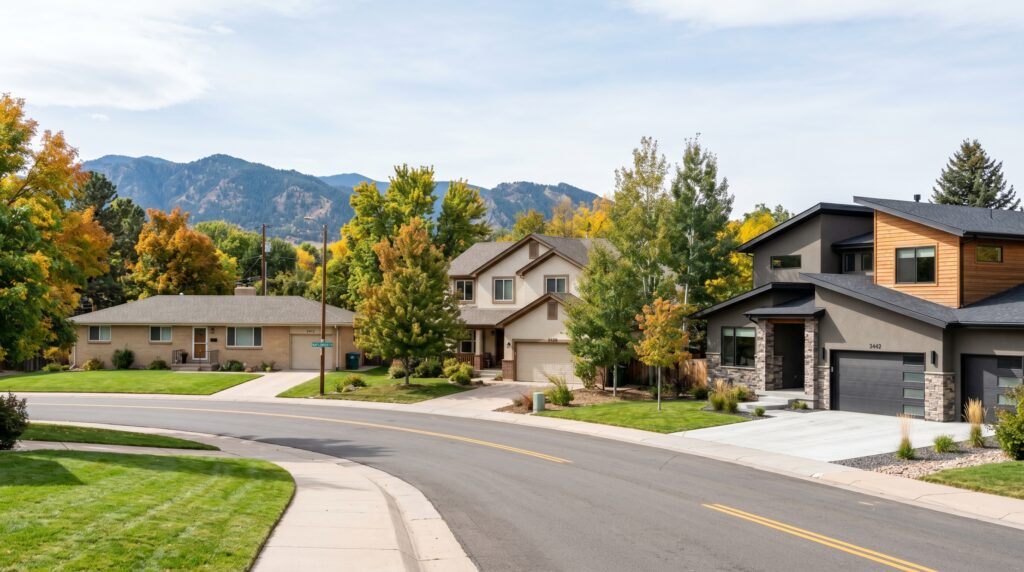
Income is the starting point, not the ceiling. The table below shows roughly how much home a Colorado buyer can afford at five common household income tiers, assuming a 30-year fixed rate around 6.25%, 10% down, and the 28% front-end DTI cap. Adjust the home price up or down 10% if your debt picture or down payment is unusually strong or weak.
| Household Income | Monthly Cap (28%) | Conservative Home Price | Stretch Home Price |
|---|---|---|---|
| $75,000 | $1,750 | $280,000 | $320,000 |
| $100,000 | $2,333 | $375,000 | $425,000 |
| $125,000 | $2,917 | $475,000 | $540,000 |
| $150,000 | $3,500 | $575,000 | $650,000 |
| $200,000 | $4,667 | $770,000 | $870,000 |
These are starting estimates. The Colorado-specific costs in the next two sections can move the real number by $30,000 to $80,000 in either direction, especially in metro district communities or high-HOA condos. Live rate context comes from Bankrate’s Colorado mortgage rate page, which tracks the daily 30-year fixed average, and the Colorado Association of Realtors publishes monthly market reports with the latest median sale prices by region.
Where Each Income Tier Actually Buys in Colorado
The income table is most useful when you pair it with where Colorado homes at each price point actually exist. Below $400,000, Front Range single-family inventory is very thin and most buyers end up looking at townhomes, condos, or single-family homes in Pueblo, Greeley, parts of Colorado Springs, and the eastern plains. Around $400,000 to $500,000, single-family options open up in Loveland, parts of Longmont, Aurora, Westminster, Thornton, and Colorado Springs. The $500,000 to $700,000 band is the largest pool of Front Range single-family inventory, covering most of the metro Denver suburbs and Northern Colorado.
Above $700,000, Boulder County, central Denver neighborhoods, Cherry Creek-adjacent submarkets, and the higher-end mountain resort towns become realistic. These ranges shift with mortgage rates: each 1% rate increase pushes buyers down roughly one income tier in what they can afford, and each 1% decrease has the opposite effect. For a current snapshot of where the Colorado market sits, our Colorado real estate market overview covers the price and inventory data worth tracking before writing an offer.
Two Real Colorado Affordability Scenarios on a $125,000 Household Income
Two buyers walk into the same Colorado market with the same income, the same credit score, and the same mortgage rate. One plays it safe. One stretches. The numbers come out very differently, and so does what their life looks like five years after closing. The comparison below shows both paths on a $125,000 household income, which sits roughly at the Colorado dual-earner median.
Both scenarios assume a 30-year fixed mortgage around 6.25%, average Colorado property tax (about 0.49% effective rate), Front Range homeowners insurance, and no significant non-mortgage debt. The only variables that change between the two paths are the down payment percentage and how aggressively the buyer pushes their front-end debt-to-income ratio.
Colorado Buyer Affordability
Same income, two very different homes
Two real Colorado affordability paths on a $125,000 household income at a current mortgage rate around 6.25%. The numbers come out very differently depending on how hard you stretch.
Conservative Buyer
- Home price$475,000
- Down payment$95,000
- Loan amount$380,000
- P+I monthly$2,341
- Tax + insurance$398
- PMI$0
- Total monthly$2,739
- Front-end DTI26.3%
- CushionStrong
Stretch Buyer
- Home price$510,000
- Down payment$25,500
- Loan amount$484,500
- P+I monthly$2,983
- Tax + insurance$433
- PMI$200
- Total monthly$3,616
- Front-end DTI34.7%
- CushionTight
The right number is whatever leaves you with breathing room when life changes, not the lender's maximum approval.
Assumptions: 30-year fixed around 6.25%, Colorado avg property tax + insurance
Both buyers qualify for both paths. Both lenders approve both files. The choice between them isn’t about what’s allowed by the mortgage rules; it’s about how much margin a buyer wants between their monthly obligations and their gross income. The conservative buyer spends roughly $880 less every month and brings $70,000 more cash to closing. The stretch buyer ends up in a slightly larger home with substantially less cash up front, but pays an extra $200 a month in PMI until they cross 20% equity, which typically takes 7 to 10 years of standard payments at this rate, faster if home values appreciate.
When the Conservative Path Wins
The conservative scenario is the right call when income stability is uncertain, when reserves outside the down payment are thin, or when major life changes are coming in the next few years. Variable-income buyers (sales reps, freelancers, business owners, anyone with bonus-heavy compensation) almost always benefit from the extra margin. So do households planning a child within two to three years, a career pivot, a parent moving in, or a transition to a single income. The lower monthly payment also frees up cash flow for retirement contributions and emergency reserves, both of which compound faster than the equity gain from buying $35,000 more home. Conservative buyers also avoid PMI entirely, which is real money: roughly $24,000 over the typical PMI lifetime on a $480,000 loan.
When the Stretch Path Wins
The stretch scenario fits dual-income W-2 households with stable jobs, real savings outside the down payment, and a long time horizon in the home. The argument is mathematical: keeping $70,000 invested at historical 8% equity returns generates roughly $90,000 of additional wealth over a decade, while the home appreciates at the same rate regardless of how much was put down. The extra PMI and slightly tighter monthly margin are real costs, but they are temporary. By the time PMI drops off, most stretch buyers have grown income enough that the original stretch feels comfortable. Stretch is also the right call when home prices in your target submarket are climbing faster than your savings rate, where waiting two years to save another $50,000 can mean missing $80,000 of appreciation.

Five Colorado-Specific Costs That Affect Your Affordability Budget
National affordability calculators ignore the local quirks that move a Colorado bill by hundreds of dollars a month. Five costs worth modeling before you write an offer.
Metro District Mills
Newer Front Range subdivisions in Adams, Douglas, Weld, and parts of Denver County often sit inside metropolitan districts, special taxing entities created to fund roads, water, and other infrastructure in new developments. They add 30 to 50 mills to the property tax bill on top of the standard county mill levy. On a $500,000 home, that’s an extra $1,000 to $1,800 a year, or $80 to $150 a month, that doesn’t appear in basic affordability tools and can quietly push a budget out of range.
Hail Belt Insurance Premiums
Colorado’s Front Range is one of the most active hail zones in the country. Homeowners insurance premiums in Boulder, Adams, Weld, and Larimer counties typically run 25 to 45% above the US average. Budget $1,800 to $2,800 per year for a typical $500,000 Colorado home, versus $1,200 to $1,500 in lower-risk states. Insurance is the second-biggest non-mortgage line item after property tax in most Colorado payments.
HOA and Metro District Fees
Single-family Colorado HOA dues commonly run $40 to $150 per month for community amenities, while townhome and condo HOAs run $250 to $600 per month. Some metro district communities also bill an annual operating fee on top of the property tax assessment. All of these count against your front-end DTI, and lenders will subtract them from your housing budget when calculating how much loan you qualify for.
Mortgage Insurance
Buying with less than 20% down means PMI on conventional loans (typically 0.5% to 1.0% of the loan amount annually) or MIP on FHA loans (0.55% annually plus an upfront premium financed into the loan). On a $475,000 loan, that’s $200 to $400 a month until you build enough equity to drop it. PMI ends automatically at 78% LTV, while FHA MIP often stays for the life of the loan unless you refinance into a conventional product.
Closing Costs
Colorado closing costs typically run 2 to 3% of the purchase price, covering title insurance, lender fees, HOA transfer fees, prepaid taxes, and prepaid homeowners insurance. On a $500,000 home, that’s $10,000 to $15,000 of cash needed at the table on top of the down payment. Our guide to average closing costs in Colorado breaks down each line item with current numbers.
Need to model the real all-in cost?
The JROC team builds property-specific affordability models that include metro district mills, HOA dues, and Colorado insurance estimates. → Get your custom number
How to Stretch Your Affordability in Colorado
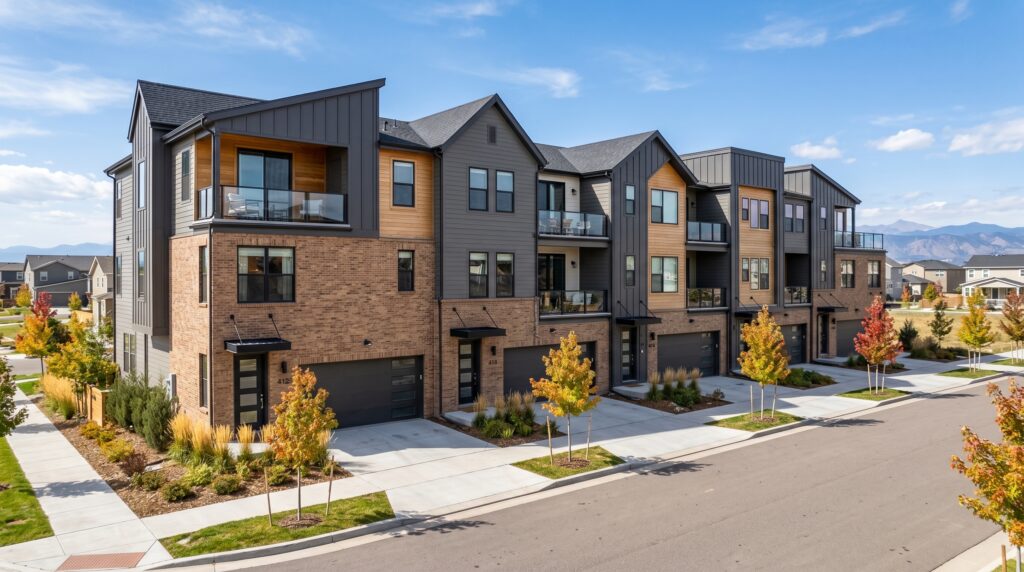
If the numbers come up short, several Colorado-specific levers can move buying power up by $50,000 to $100,000 without dramatically increasing monthly risk.
- Use Colorado down payment assistance. The Colorado Housing and Finance Authority (CHFA) offers grants up to 4% of the loan amount toward down payment and closing costs. Our Colorado down payment assistance guide walks through CHFA, MetroDPA, and city-specific programs.
- Compare loan products. FHA often beats conventional for buyers under 720 credit. VA loans require zero down for eligible veterans. The JROC guide to Colorado home loans compares the major options.
- Shop the rate. A 0.5% rate difference on a $400,000 loan is $130 a month, or about $47,000 over 30 years. Our how to get the best mortgage rates in Colorado guide covers what actually moves a rate quote.
- Pay down high-DTI debt first. Eliminating a $400 monthly car payment can free up roughly $60,000 of additional buying power, since lenders look at minimum monthly payments.
- Consider house hacking. A duplex or home with a basement rental gets owner-occupant financing while delivering rental income that offsets the payment. Our Denver house hacking guide covers the strategy.
Top 5 Affordability Mistakes Colorado Buyers Make
These are the patterns JROC sees most often when reviewing affordability with Colorado buyers.
- Maxing out at the lender’s pre-approval cap. Lenders approve based on DTI, not lifestyle. Their max is rarely your max.
- Forgetting metro district mills. Newer-development homes can carry 30 to 50 extra mills, adding $100/month to a tax bill that looked manageable on paper.
- Skipping the inspection budget. Colorado hail-belt homes often need roof or window work within 5 years. Our Colorado home inspection red flags guide covers what to watch for.
- Underestimating utilities and commute. Foothills homes with electric heat run $300+/month in winter; Front Range commutes to Denver can add $400/month in fuel and tolls.
- Ignoring HOA financial health. An underfunded HOA can hit you with special assessments of $5,000+ when a roof or boiler fails. Always review HOA reserves before writing an offer.
FAQs About How Much House You Can Afford in Colorado
How much do I need to make to afford a $500,000 house in Colorado?
At a mortgage rate around 6.25% with 10% down and average Colorado property tax and insurance, a $500,000 home runs roughly $3,200 to $3,400 a month all-in. Using the 28% rule, that suggests a household income of around $135,000 to $145,000. With a 36% stretch and lower debts, you can manage at around $115,000 to $125,000, but with thinner monthly margin.
Can I afford a house in Colorado on $100,000 a year?
Yes, but realistically in the $375,000 to $425,000 range, which limits you to townhomes, condos, or single-family homes outside the highest-cost Front Range metros. Loveland, Greeley, Pueblo, Colorado Springs, and parts of Longmont are options at this income tier. Boulder and central Denver are out of reach without significant down payment help or a co-borrower.
What is the 28/36 rule for Colorado mortgages?
The 28/36 rule says housing costs (PITI plus HOA) shouldn’t exceed 28% of gross monthly income, and total debt payments shouldn’t exceed 36%. Most Colorado lenders will approve up to 45% back-end on conventional loans and 50% on FHA, but those higher caps leave very little margin if rates rise, jobs change, or repairs come up. Helpful background on income trends from the Federal Reserve Bank of St. Louis can help you benchmark where you sit relative to Colorado median income.
Do Colorado property taxes hurt affordability?
Less than buyers expect. Colorado’s effective property tax rate is about 0.49%, well below the US average of 0.90%. On a $500,000 home that’s roughly $200 a month versus $375 a month in many other states. The bigger Colorado affordability hits come from hail-zone insurance and metro district mills, not from base property tax.
Conclusion
How much house you can afford in Colorado comes down to four numbers: your gross income, your existing monthly debts, your down payment, and your tolerance for monthly stretch versus margin. The 28/36 rule is a strong starting point. Adjusting for Colorado’s lower property taxes, higher hail insurance, metro district mills, and HOA dues gets you to a real number that lenders won’t surprise you with at closing. The conservative path leaves room for life. The stretch path keeps more cash deployed elsewhere. Both work for different buyers.
Founded by Jami and Rocco Montana, JROC Properties brings real estate expertise and residential construction knowledge together under one roof. Serving Boulder County, Denver, Longmont, and Northern Colorado, JROC helps buyers run real affordability numbers on real properties before they write the offer. When you’re ready to turn a budget into a house, the JROC team is a call away.
Find your real Colorado affordability number.
Work with the JROC Properties team to model property-specific affordability, monthly payment, and cash-to-close on any Colorado home you’re considering. → Start your home search