
The Best Neighborhoods in Boulder for Young Adults
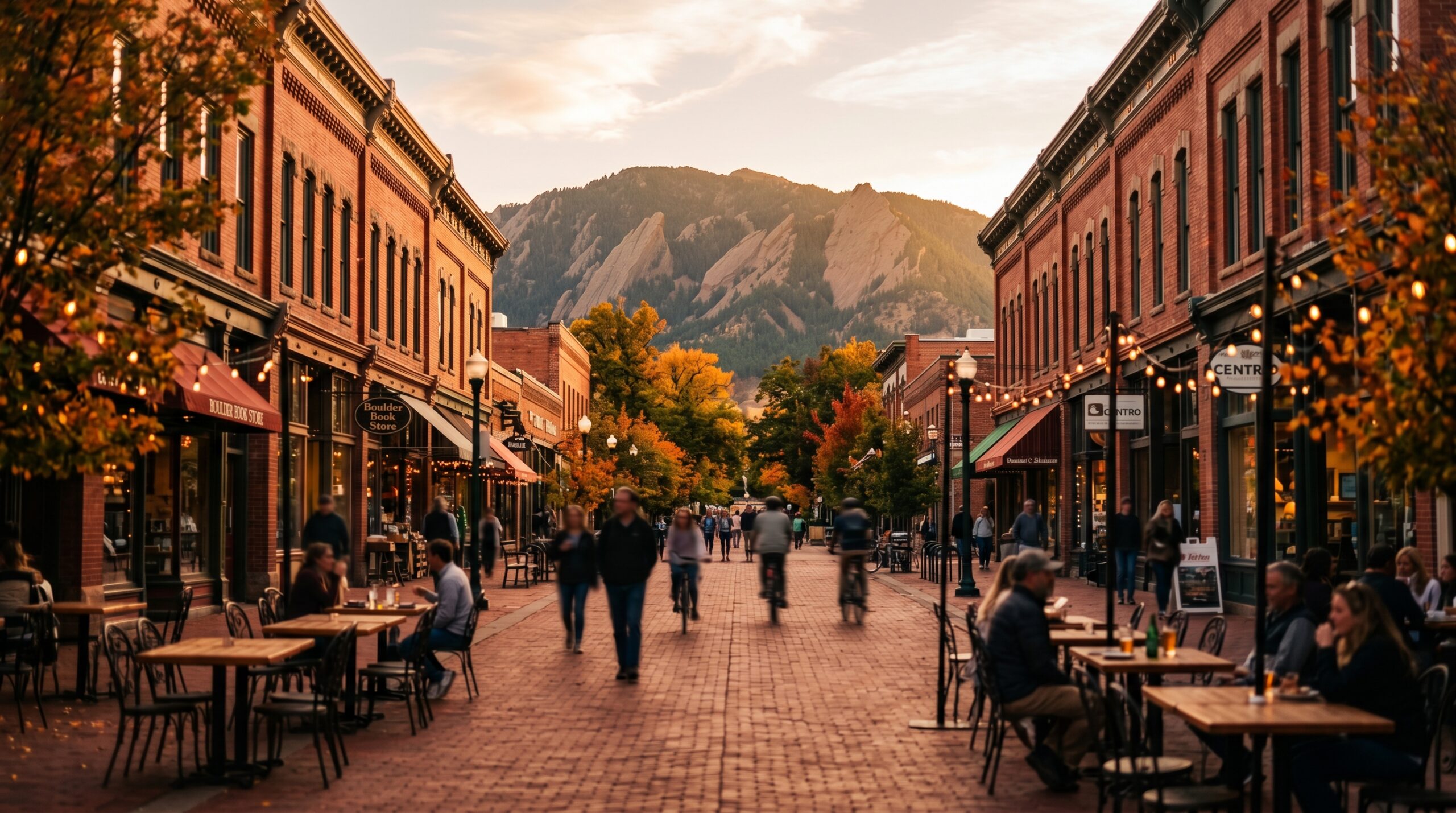
The best neighborhoods in Boulder for young adults blend walkable streets, close-by coffee, a job market that makes sense in your 20s and 30s, and trailheads you can hit before work. Boulder is compact, so moving a few blocks changes your whole day, from whether you bike to Pearl for dinner to whether you can still hear a show from your porch. Finding the right pocket matters. The team at JROC Properties has walked buyers and renters through every one of these streets and can help you match the vibe to your budget.
This guide breaks down six standout Boulder neighborhoods young adults gravitate to, what each one trades off, and how to actually land a place in a market this tight.
New to Boulder? Get a local read on where to land.
Talk with the JROC Properties team for a no-pressure look at Boulder neighborhoods that fit your budget, job, and lifestyle. → Schedule a quick call
TL;DR
Boulder rewards young adults who pick a neighborhood with intention. Downtown and University Hill give you maximum walkability and social energy. Whittier and North Boulder soften the intensity with more space and quieter nights. Martin Acres and Holiday open the door to ownership and longer-term roots. Rent here runs high for Colorado, so budget tight, house-hack if you can, and move fast when the right place hits the market. The right block matters more than the right city.
Key Points
- Downtown and The Hill trade money for walkability and social life next to CU.
- Whittier and North Boulder balance vibe with more breathing room.
- Martin Acres and Holiday open the door to first-time ownership or townhome life.
- Budget reality: 1BR rent typically runs $1,800 to $2,400 in central Boulder.
- Walk Score in downtown Boulder clears 90 and drives most young-adult preference patterns.
- Rent vs buy mostly comes down to how long you plan to stay.
- JROC Properties works Boulder County daily and can match you to the right street, not just the right zip.
Table of Contents
Why Boulder Pulls In Young Adults
Boulder concentrates a lot of what matters in your 20s and 30s into one small map. A flagship research university at CU Boulder sits on the edge of a walkable downtown. Tech, climate, and outdoor-industry employers cluster in Pearl Street and Gunbarrel. The trail network managed by Boulder Open Space and Mountain Parks starts where the streets end. The result is a city that skews noticeably young compared to the rest of Colorado.
Before you zoom in on a neighborhood, it helps to see Boulder in numbers. Here’s the snapshot.
[HTML EMBED: Stat grid: Boulder by the numbers for young adults (median age, CU enrollment, walk score, rent, trails, sun)]
The numbers tell a simple story. The median age is low, the sun shows up most days of the year, and the Walk Score in the core is genuinely walkable-first. The trade-off is rent. Boulder is expensive for Colorado because the supply is tightly zoned and demand from CU, from tech employers, and from remote workers keeps the pressure on.
One more thing shapes where young adults land. Boulder is cut by a rough north-south divide. North of Pearl you get more creative and residential energy. South of Baseline you get better value, mid-century homes, and faster access to the south Boulder trails. Central Boulder, the stretch around CU and Pearl, is the high-energy corridor. Each of those three zones attracts a different kind of young adult.
Boulder, Colorado · Young Adult Snapshot
Boulder by the numbers
A quick read on what Boulder delivers for young adults, from the median age to the trail miles out the front door.
Median Age
Boulder's median resident age
Young for COCU Enrollment
Students at CU Boulder
Central coreDays of Sun
Sunny days per year
Annual avgBreweries
Taprooms inside city limits
GrowingTrail Miles
OSMP open-space system miles
Out the doorMedian 1BR
Central Boulder monthly rent
Plan aheadWalk Score
Downtown Boulder Walker's Paradise
Top tierTo Denver
Boulder to downtown Denver
US-36Boulder packs a young demographic, serious walkability, and mountain access into a city the size of a mid-market suburb.
Sources: City of Boulder, CU Boulder, OSMP, Walk Score
The numbers tell a simple story. The median age is low, the sun shows up most days of the year, and the Walk Score in the core is genuinely walkable-first. The trade-off is rent. Boulder is expensive for Colorado because the supply is tightly zoned and demand from CU, from tech employers, and from remote workers keeps the pressure on.
One more thing shapes where young adults land. Boulder is cut by a rough north-south divide. North of Pearl you get more creative and residential energy. South of Baseline you get better value, mid-century homes, and faster access to the south Boulder trails. Central Boulder, the stretch around CU and Pearl, is the high-energy corridor. Each of those three zones attracts a different kind of young adult.
The 6 Best Neighborhoods in Boulder for Young Adults
These six neighborhoods come up again and again in JROC’s conversations with young buyers and renters moving to Boulder. Each one earns its spot for a different reason.
1. Downtown Boulder and the Pearl Street Corridor
If walkability is the whole point, this is the answer. Lofts and condos above retail put you steps from the Pearl Street Mall, with restaurants, bookstores, live music, and a Saturday farmers market. Rent runs high here, often $2,500 to $3,500 for a 1BR, but you trade the car for sidewalks.
Best for: remote workers, early-career professionals, anyone for whom a parking spot is a want rather than a need.
2. University Hill (The Hill)
Adjacent to CU Boulder, The Hill is the classic college neighborhood. Bungalows cut into rooms, coffee shops, small music venues, and a short walk to both campus and Pearl. Rent per room is often the best value in the city. The trade-offs are game-day energy and older housing stock that has seen some student mileage.
Best for: grad students, recent grads staying in town, anyone who wants to live cheap without leaving the center.
3. Whittier
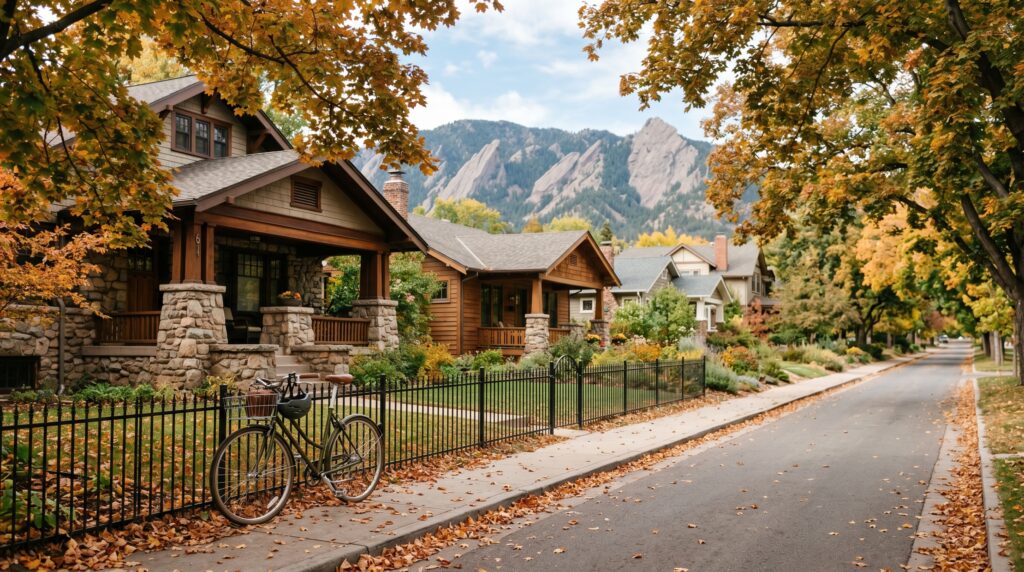
Whittier is a grown-up version of The Hill. The streets sit between downtown and campus, the bungalows have tree-lined yards, and you can bike to Pearl in five minutes or to Chautauqua in fifteen. It runs quieter than The Hill, with a mix of young professionals, grad students, and young families.
Best for: late-20s and early-30s professionals who want walkability on a calmer street.
4. North Boulder (NoBo)
NoBo is the art district, roughly from Alpine Avenue up to Lee Hill. Galleries, breweries, newer mixed-use buildings, and a growing trail connection to the open space north of town. Rents run below downtown, and the drive to Pearl is short. If you’re timing your move, this Boulder buying guide is a good companion read on when the NoBo market softens.
Best for: creative types, hybrid workers, couples starting out.
5. Martin Acres (South Boulder)
Martin Acres is where a lot of young adults first buy in Boulder. Mid-century ranch homes sit on flat, walkable streets a few minutes from Table Mesa, the bus to CU, and south Boulder trail access. Prices are among the lowest in the city for a single-family. The feel is quieter, more suburban, less bar-forward.
Best for: first-time buyers, mountain access, long-term roots.
6. Holiday and Uptown Broadway
Holiday is a planned walkable district in North Boulder with townhomes, coffee shops, a small plaza, and yoga studios. Designed from the ground up as mixed-use, it delivers walkable daily life without the Pearl Street price tag.
Best for: young couples who want walkable life without downtown prices.
Want to tour a few of these in one afternoon?
The JROC Properties team can line up showings across Boulder neighborhoods in a single trip. → Reach out to get started

Rent vs Buy in Boulder: What Makes Sense for Young Adults
Boulder rent is high, but Boulder buy prices are higher. A 1BR condo that rents for $2,200 a month can easily list at $500,000 or more. Whether renting or buying is the right call for a young adult usually comes down to one question: how long are you staying?
If the honest answer is under three years, rent. Closing costs, a slower-appreciating condo market, and the hassle of selling often eat any savings. If you’re planning five years or more, the math tilts toward buying, especially if you can pair a first-time buyer program with a duplex or townhouse. Colorado down payment assistance can meaningfully lower the entry bar, and a house-hacking approach (live in one unit, rent the other) is another angle worth a serious look.
Here’s a quick frame to help you decide.
| Factor | Rent | Buy |
|---|---|---|
| Time in Boulder | Under 3 years | 5+ years |
| Flexibility | High | Lower |
| Typical 1BR monthly | $1,800 to $2,400 | $2,800 to $3,800 PITI |
| Upfront cost | First, last, deposit | 3% to 20% down + closing |
| Equity building | None | Yes |
| Best fit | Early career, unsure | Stable income, staying put |
For most young adults in Boulder, renting year one to feel out the neighborhoods and then buying in year two or three is the pattern that works best.
How to Actually Land a Place in Boulder
Boulder’s housing market moves fast. Young adults who land good places tend to do the same few things.
- Know your top two neighborhoods before you start looking. Generic searches waste weeks. Pick one central option (Downtown, The Hill, Whittier) and one value option (NoBo, Martin Acres, Holiday) and focus there.
- Budget with utilities and transit in mind. Boulder rent often excludes utilities, and a car downtown is a $200 to $300 a month problem between parking and gas. The RTD HOP and SKIP buses plus a solid bike can redraw your budget.
- Have your paperwork ready. For rentals, that’s proof of income, references, and deposits ready to wire. For buying, it’s a pre-approval, not just a pre-qualification. The JROC Properties financing page walks through how to move fast on a lender.
- Tour early in the week. Saturday tours pit you against every other applicant. Weekday showings get you seen first.
- Don’t skip the context check. Walk the street at 10 pm on a Friday before you sign. The Hill at 2 pm is not The Hill at 2 am.
The biggest mistake young adults make in Boulder is treating the search like Denver’s. Denver has volume, Boulder has scarcity. Move on a place the day you like it, and lean on a local agent who pre-tours before listings hit the open market. For buyers, the JROC buyer’s guide is a practical walk-through of the Boulder-specific steps.
Top 5 Moves Young Adults Make to Win the Boulder Housing Search
If you take nothing else from this guide on the best neighborhoods in Boulder for young adults, take these five patterns. They come straight from JROC’s work with renters and buyers moving into Boulder County.
- Tour the neighborhood at night. Daytime showings hide what evenings reveal, from street noise to parking chaos.
- Budget for the bike, not the car. A good bike unlocks Boulder more than a car does. Build that into your housing choice.
- House-hack when you can. Buying a duplex and renting half is one of the few affordable-buy paths in Boulder County.
- Plan the job commute first. Pearl Street, CU, and Gunbarrel all have different commute patterns. Your neighborhood should match.
- Use a local agent. National search portals miss pocket listings. A JROC agent in Boulder hears about places before the listings go live.
FAQs About Living in Boulder as a Young Adult
What’s the cheapest neighborhood in Boulder for young adults?
Martin Acres in south Boulder is typically the most affordable zip code inside city limits for buyers. For renters, The Hill offers the lowest per-room rent because bedrooms are often rented individually in larger student houses. Just outside Boulder proper, Gunbarrel and the closer-in stretches of Louisville and Lafayette cut costs further without adding much drive time.
Is Boulder or Denver better for young professionals?
Denver has more jobs, more nightlife, and cheaper rent. Boulder has better outdoor access, a tighter community, and a strong pocket of tech and climate employers. The call often comes down to job market and lifestyle. A lot of young adults who start in Denver eventually move to Boulder, and vice versa. If you’re still weighing cities, our guide to moving to Colorado lays out what each city gets right.
How much should I budget for rent in Boulder?
Plan for $1,800 to $2,400 a month for a 1BR in central Boulder, and $1,500 to $1,900 if you’re open to North Boulder or Martin Acres. Add another $200 or so for utilities, parking, and renters insurance. Shared rentals with two or three roommates bring per-person rent closer to $1,000 to $1,400 per month.
Can I live in Boulder without a car?
Yes, especially if you live in Downtown, The Hill, Whittier, or Holiday. Boulder has a solid bike network and protected lanes, the HOP and SKIP local buses, and an RTD bus connection to Denver. A lot of young adults go car-light rather than car-free: a bike for daily commuting and errands, a car for trailheads and weekend trips.
Conclusion
The best neighborhoods in Boulder for young adults share a short list of traits: walkable streets, quick access to the mountains, and a rent or buy price that doesn’t force you to skip everything else in your life. Downtown, The Hill, Whittier, NoBo, Martin Acres, and Holiday each deliver on those traits in a different way. The right pick depends on your budget, your job, and how loud you want your Friday night to be.
Founded by Jami and Rocco Montana, JROC Properties brings together real estate expertise and residential construction knowledge under one roof. Serving Boulder County, Denver, Longmont, and Northern Colorado, JROC helps young adults land the right Boulder neighborhood the first time, whether you’re renting your first place here or buying for the long haul. If you’re ready to turn a shortlist into a street address, the JROC team is a call away.
Find the Boulder neighborhood that actually fits you.
Connect with the JROC Properties team for personalized Boulder real estate guidance built around your budget, your job, and your lifestyle. → Start your Boulder search