
Old Home Renovation Ideas That Pay Off in Colorado
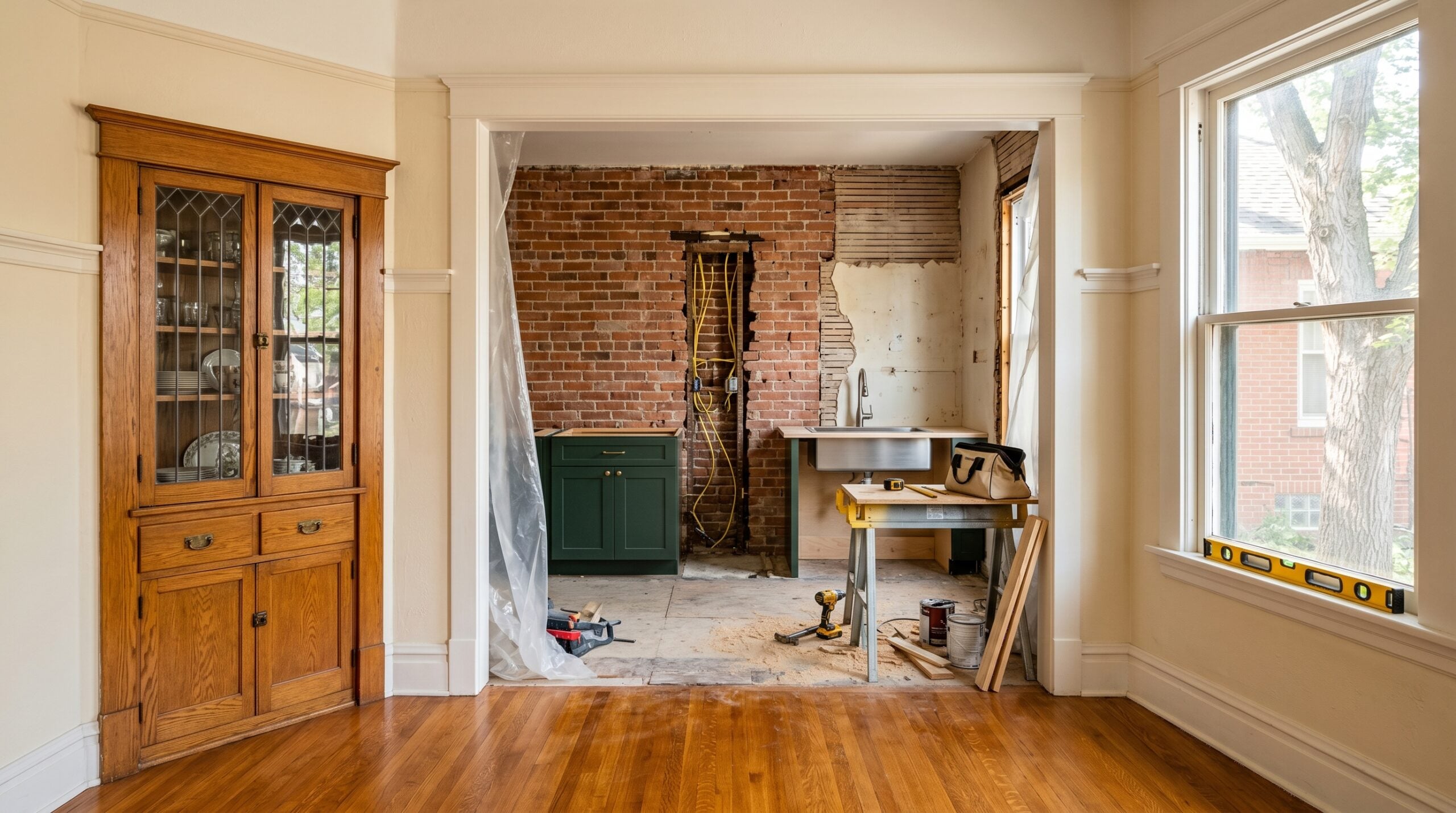
Old Home Renovation Ideas: What to Preserve and What to Modernize
Old home renovation ideas usually start with a wishlist: a refinished hardwood floor, an open kitchen, a clawfoot tub in the master bath. They almost always end up bigger than that. Colorado’s older homes (the Denver Highlands Victorians, the Park Hill bungalows, the mid-century ranches across Boulder County and Longmont, the historic miners’ cottages in Lyons) come with character that nobody could build today. They also come with knob-and-tube wiring, galvanized plumbing, original lath-and-plaster walls, and a foundation that has been wrestling with Colorado clay soil for a century. The team at JROC Properties brings residential construction expertise to homeowners thinking about restoring, renovating, or fully reimagining an older Colorado home.
This guide covers what counts as an old home in Colorado, where to start your renovation, the highest-value projects, the preservation-versus-modernization decision, realistic cost ranges, and the mistakes that turn a charming old house into an unaffordable money pit.
Thinking about renovating an older Colorado home?
JROC Properties helps Colorado homeowners scope old-home renovations that respect character, modernize the systems that matter, and protect resale value. → Book a planning call
TL;DR
Old home renovation ideas tend to fall into four buckets: mechanical updates (electrical, plumbing, HVAC), structural repairs (foundation and framing), aesthetic and preservation decisions (original floors, woodwork, windows, masonry), and adaptive layout changes (open-concept kitchens, primary suite additions, finished basements). In a typical Colorado old-home renovation budget, the wet rooms (kitchen and bath) absorb about a third, mechanical updates eat another quarter, structural work takes 10 to 15 percent, and roughly 12 percent goes to hazard abatement (lead, asbestos), permits, and a contingency you will almost certainly need. Whole-home renovations on older Colorado homes typically run $150,000 to $400,000 depending on scope, character, and how many surprises the walls are hiding.
Key Points
- “Old home” in Colorado generally means pre-1980 construction. Pre-1950s homes carry the highest renovation complexity.
- Hidden hazards are common: lead paint (pre-1978), asbestos (pre-1980), knob-and-tube wiring (pre-1950s), galvanized plumbing (pre-1960s).
- Typical cost range: $150,000 to $400,000 for whole-home renovations; $25,000 to $80,000 for a kitchen; $12,000 to $40,000 for a bath.
- Mechanical updates (electrical, plumbing, HVAC) eat roughly 25% of an old-home renovation budget by themselves.
- Build a 10 to 20% contingency into the budget for older homes. National rules of thumb (5 to 10%) underestimate old-home surprises.
- Hire EPA RRP certified contractors if your home was built before 1978. Federal lead-safe practices are required, not optional.
- Preserve character that adds value: original hardwood, original windows in good shape, original built-ins, original masonry. Replace systems that risk safety.
Table of Contents
What Counts as an “Old Home” in Colorado?
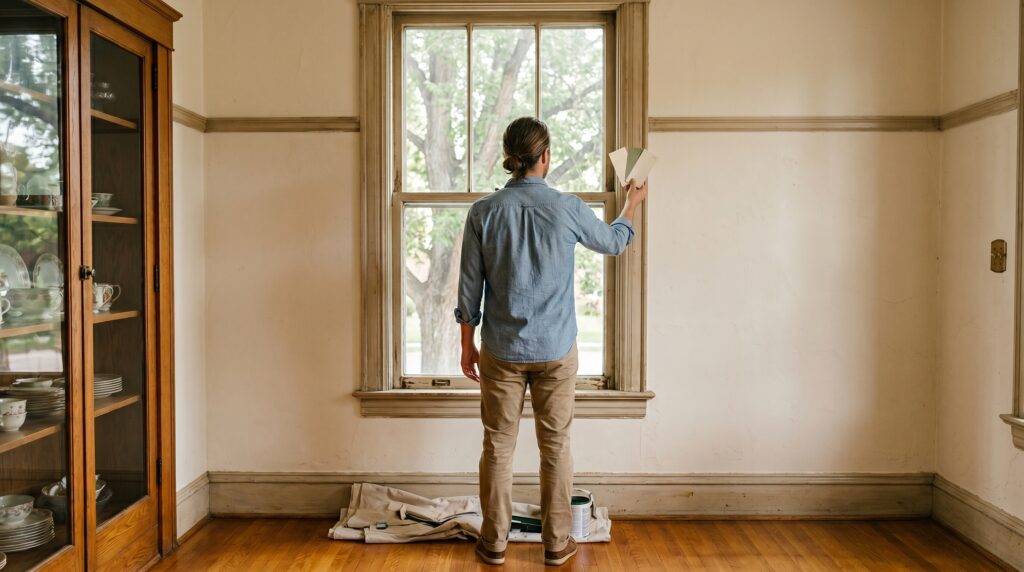
The shorthand definition: anything built before 1980. The practical definition has three brackets that each come with different renovation realities.
Pre-1950 homes (Victorian, Edwardian, early Craftsman, foursquare, and the original miners’ cottages along the Front Range) are the most character-rich and the most renovation-complex. Expect plaster-and-lath walls, knob-and-tube wiring, galvanized plumbing, lead paint, possible asbestos, and a foundation that has had a century of freeze-thaw cycles to settle. These homes show up in Denver’s Capitol Hill, Highlands, and Five Points, in Boulder’s Mapleton Hill and Whittier, in downtown Longmont and Lyons, and in mining towns from Lyons to Leadville.
Mid-century homes (1950s through 1970s) are the largest old-home stock in Colorado: the ranches across Bonnie Brae, Hilltop, Krisana Park, north Boulder, and the suburbs across Adams and Jefferson counties. Construction is sturdier than the Victorians, but asbestos peaks in this era (popcorn ceilings, vinyl flooring, pipe insulation), aluminum wiring shows up in some 1960s and 1970s homes, and original single-pane steel-frame windows are common. The EPA’s asbestos guidance for homeowners is the standard reference for what to test and when to call a licensed abatement contractor.
Pre-1980 ranches and split-levels round out the third bracket. Lead paint and asbestos are still possible, mechanical systems are typically end-of-life, and the layouts often need modernizing for how households actually live now. Renovations here are usually less invasive than on a Victorian but still benefit from a serious mechanical refresh.
Knowing your home’s age affects every renovation decision: which materials need testing, which contractors you legally have to hire, which preservation rules might apply (especially in historic districts), and how much contingency to build into the budget. Common Colorado home inspection red flags covers what to surface before you swing a hammer.
Old Home Renovation Ideas: Where to Start
The biggest old-home renovation mistake is starting with the visible stuff (the kitchen, the bath, the floors) before the invisible stuff (the wiring, the plumbing, the foundation). The right order saves money and headaches. Old home renovation ideas should sequence through four pillars in roughly this order.
Mechanical Updates: Electrical, Plumbing, HVAC
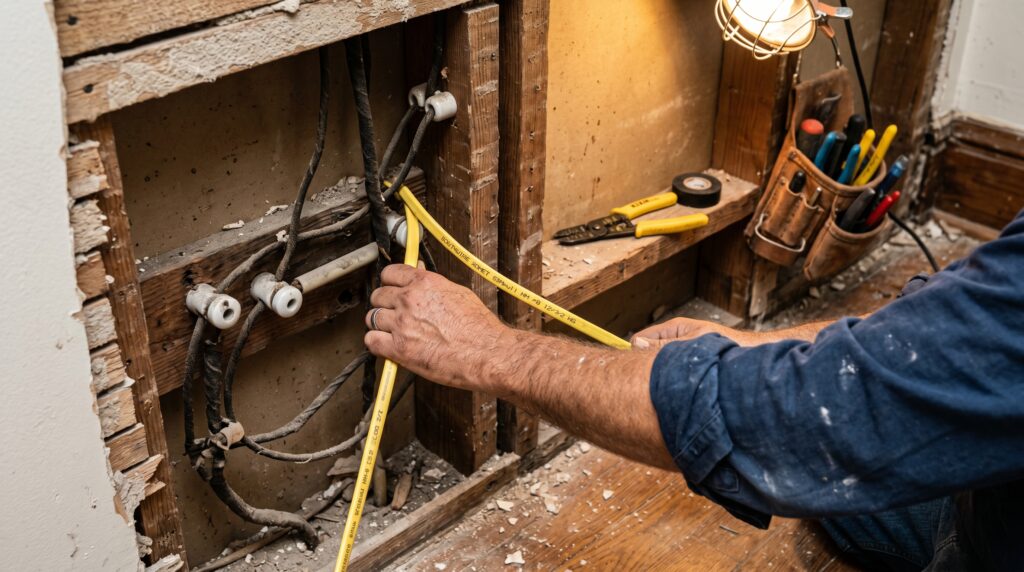
Open every wall you are going to open anyway and replace any knob-and-tube wiring, undersized panels (60 amps is typical in older homes; 200 amps is the modern minimum), and galvanized plumbing. Add insulation while the walls are open. Replace the furnace and water heater if they are at end-of-life. The cost of replacing a knob-and-tube system in a typical Denver-area bungalow runs $8,000 to $20,000 depending on house size and how much plaster needs cutting. Whole-home repiping from galvanized runs $4,000 to $15,000. Doing this work while walls are open during another renovation is dramatically cheaper than coming back later. EPA’s Renovation, Repair, and Painting (RRP) program requires lead-safe practices on any pre-1978 home, so the contractor needs to be RRP certified.
Structural and Foundation Work
Colorado’s clay-heavy soils expand and contract with moisture, which means foundation cracks, sloped floors, and stuck doors are common in older homes. Get a structural engineer to inspect before any major renovation: their $400 to $800 evaluation can save you tens of thousands later. Common fixes range from $5,000 (cracks and crack injection) to $40,000+ (piering and underpinning for serious settlement). If you are reconfiguring rooms by removing walls, every load-bearing change needs an engineer’s stamp and a permit.
Aesthetic and Preservation Decisions
This is where the personality of an old home renovation gets decided. Original quarter-sawn oak floors that have lived under carpet for forty years usually refinish beautifully for $3 to $8 per square foot. Original wood windows are often worth preserving and weatherstripping rather than replacing, as wholesale replacement is a top-five regret for old-home owners and the new vinyl rarely lasts as long as the original wood. Original built-ins, masonry, and trim work tend to add value when restored. New replicas of original features rarely do.
Adaptive Layout Changes
Old homes were built for old patterns of living: small closed kitchens, separate dining rooms, single bathrooms, narrow hallways. The most valuable layout changes in a Colorado old-home renovation are usually opening the kitchen to the main living area, adding or upgrading a primary suite, and finishing the basement. Each of these is its own project. A Colorado basement finishing project on an older home with stone or brick foundation walls is its own specialty and typically runs $35,000 to $90,000 depending on size and finish level.
Where the Money Actually Goes
Old-home renovation budget allocation
A typical Colorado old-home renovation budget by category. Wet rooms take a third, mechanical and structural take another third, and the rest is finishes, abatement, and contingency.
National calculators rarely account for the 12% old-home tax. Plan for it from day one.
Sources: HomeGuide, Angi, This Old House, JROC build experience
The pattern across the four pillars: invisible work first, visible work second, character preservation woven throughout. A good plan often does mechanical and structural in year one, kitchen and bath in year two, and exterior or final cosmetic work in year three. Phasing protects cash flow and lets early discoveries inform later decisions.
The Highest-Value Old Home Renovations
Not every old-home renovation idea is created equal at resale or in daily livability. The list below is sequenced by typical return on a Colorado renovation budget.
Kitchen
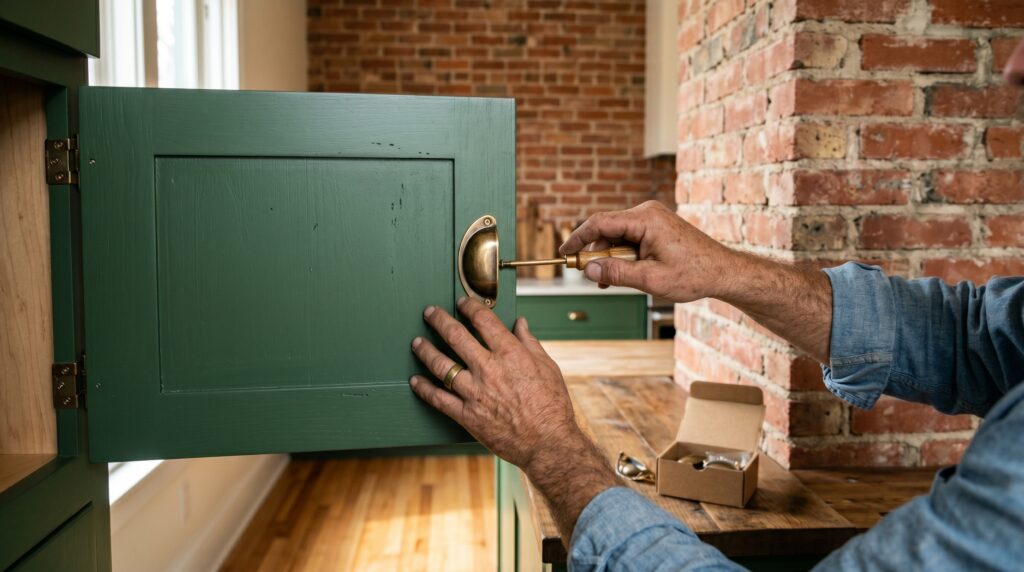
The kitchen drives more value (and more buyer interest) than any other room. In an old home, the strongest renovations preserve a signature original element (an exposed brick chimney wall, an original arched window, original hardware on a single piece of millwork) and modernize everything else. Mid-range Colorado old-home kitchen renovations run $35,000 to $80,000. A full gut with custom cabinetry, stone counters, and pro-grade appliances reaches $100,000 to $150,000. Our Denver kitchen remodeling guide covers project scope, timeline, and how to match the new work to the home’s era.
Bathroom
Old-home bathrooms are usually small, awkwardly laid out, and overdue. Mid-range renovations run $20,000 to $35,000; full conversions to a larger primary bath can hit $40,000 to $60,000. Preserve original tile patterns where possible, replace galvanized plumbing while the walls are open, and consider universal design features (curbless shower, lever handles, comfort-height toilet) so the renovation works for the next thirty years of ownership. Our Colorado bathroom remodeling guide walks through the planning and product decisions.
Living Spaces and Layout
Opening a closed kitchen to the dining and living areas is one of the most consistently valuable old-home changes in Colorado, especially in pre-1950 homes designed around small separate rooms. Cost depends entirely on whether the wall is load-bearing ($3,000 to $8,000 with a beam and engineer’s stamp) or non-load-bearing ($500 to $2,500). Refinishing original hardwood floors typically runs $3 to $8 per square foot and dramatically lifts the feel of every room they touch.
Exterior and Curb Appeal
Exterior work consistently delivers the highest ROI on remodeling industry studies. For old Colorado homes that means re-staining or repainting the original siding (preserve original lap siding where possible rather than re-cladding), restoring the original front porch, addressing trim and gutter detail, and refinishing or replacing the front door. Roof replacement runs $12,000 to $30,000 depending on pitch and material and is non-negotiable when the existing roof is past 20 years. Context on which projects return best at resale lives in Remodeling magazine’s Cost vs Value Report.
Energy Efficiency
Old Colorado homes typically leak air at the rate of 2 to 3 times a modern build. The cheapest big wins are blown-in insulation in the attic ($1,500 to $3,500), air sealing at penetrations and rim joists ($1,000 to $3,000), and weatherstripping original windows and doors. Window replacement for old wood windows is rarely the best ROI move; restoration plus interior or exterior storm windows often outperforms it for less money. A whole-home energy retrofit can cut Colorado heating bills 30 to 50%.
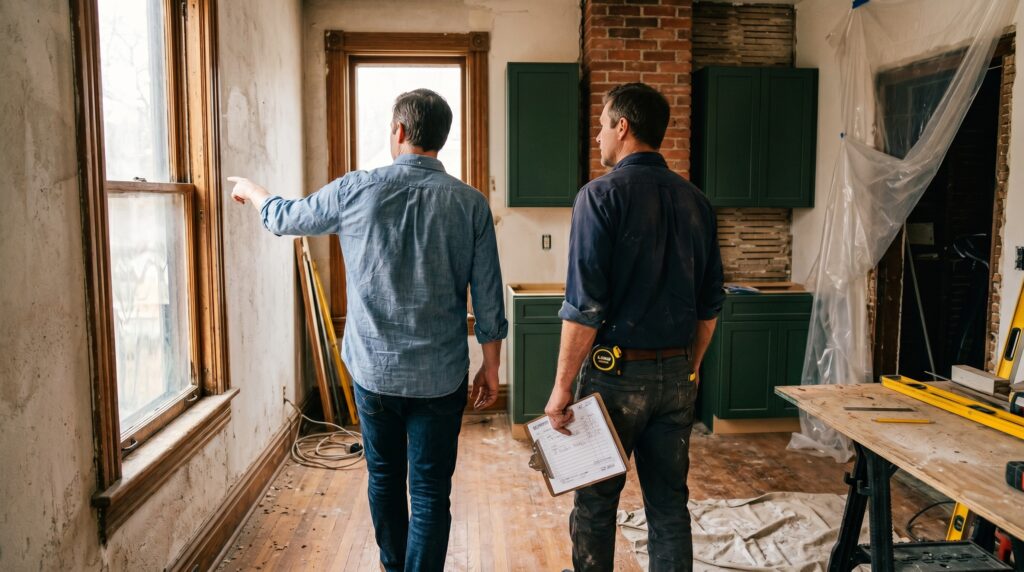
Preserving Character vs Modernizing
Every old home renovation involves a series of small philosophical decisions about what to preserve and what to modernize. The right answer is not always preservation. It is also not always modernization.
Preserve when the original feature is irreplaceable, in good structural shape, and adds character that defines the home: quarter-sawn oak floors, original wood windows in good repair, original built-ins, original brick or stone masonry, signature trim and millwork, plaster walls in sound condition.
Modernize when the original is unsafe, inefficient, or fundamentally limits how the home lives: knob-and-tube wiring, galvanized plumbing, 60-amp panels, gravity furnaces, single-pane steel windows with rotted frames, layouts that lock the kitchen away from the main living areas. Modernizing systems while keeping character is the harder middle path and usually delivers the strongest result.
Colorado homeowners considering preservation in particular should know whether their home sits in a historic district. The State Historic Preservation Office maintains the registry at History Colorado, and homes in designated districts qualify for state tax credits of up to 35% of qualified preservation work. Federal credits stack on top for income-producing properties. The tax credit can shift the math on a borderline preservation decision.
Old Home Renovation Costs in Colorado
Old-home renovation costs in Colorado run noticeably higher than national averages, driven by Front Range labor rates, permit complexity in cities with established review processes (Denver, Boulder, Longmont, Fort Collins), the prevalence of older housing stock that requires more abatement and rewiring, and the additional engineering needed for clay-soil foundations.
Labor typically accounts for 50 to 60% of an old-home renovation budget. Hazard abatement is a category most homeowners forget to budget for: lead remediation costs can range from a few hundred dollars for spot treatment to over $10,000 for whole-home work, and the CDC’s guidance on lead exposure sources is worth reading before any work that disturbs pre-1978 paint. The table below reflects typical project scopes in Boulder County, Denver, Longmont, and Northern Colorado from real builds.
| Project | Typical Cost | Timeline | ROI |
|---|---|---|---|
| Full electrical rewire (K&T to modern) | $8,000 – $20,000 | 2-4 weeks | Insurance + safety |
| Whole-home repipe (galvanized to PEX) | $4,000 – $15,000 | 1-2 weeks | Critical |
| Foundation repair (settlement) | $5,000 – $40,000+ | 1-3 weeks | Critical |
| Asbestos / lead abatement (partial) | $3,000 – $15,000 | 3-7 days | Code required |
| Hardwood floor refinishing | $3 – $8 per sq ft | 4-7 days | High |
| Mid-range kitchen renovation | $35,000 – $80,000 | 8-14 weeks | 60-75% ROI |
| Mid-range bathroom renovation | $20,000 – $35,000 | 4-6 weeks | 60-70% ROI |
| Basement finish (old home) | $35,000 – $90,000 | 8-12 weeks | 70% ROI |
| Full whole-home gut renovation | $150,000 – $400,000+ | 6-12 months | Varies |
Build a contingency of at least 15% into any old-home renovation budget. National rules of thumb recommend 5 to 10%, but old homes routinely surprise: a wall that opens to reveal an additional 100 feet of knob-and-tube, an asbestos floor under three layers of vinyl, a settled corner that needs an engineered fix. Phasing the work across multiple years makes the cash flow easier to absorb. A solid home improvement ROI consulting engagement models the resale value of each decision before you write the first check.
Need a real number on your Colorado old-home renovation?
JROC Properties scopes old-home renovations with phased sequencing, real cost estimates, and contractors who actually know historic construction. → Get a planning estimate
Top 5 Old Home Renovation Mistakes
These are the patterns JROC sees most often in Colorado old-home renovations gone sideways.
- Cosmetic before mechanical. New floors and fresh paint do not fix knob-and-tube wiring or galvanized plumbing. Open the walls once for the systems, then close them once for the finishes.
- Wholesale window replacement. Original wood windows in repairable condition usually outlive their vinyl replacements and protect home value better. Weatherstrip first, replace only when truly needed.
- Skipping the structural engineer. A $400 to $800 evaluation up front saves multiples of that later when a load-bearing wall surprises the crew mid-renovation. Catalog of common issues in our Colorado home inspection red flags guide.
- Hiring a contractor without RRP certification. Pre-1978 homes legally require lead-safe practices. Contractors who skip this are exposing your household to lead dust and you to liability.
- Underbudgeting the contingency. Old homes have surprises behind every wall. Plan for 15 to 20% contingency on top of the base bid, not 5%. The renovation either uses it or it does not, but it has to be there.
Old Home Renovation FAQs
What is the cheapest way to renovate an old home?
Phase the work over multiple years and focus first on issues that affect safety or insurance (electrical panel and knob-and-tube wiring, galvanized plumbing, roof, foundation). Then refinish what already exists (original hardwood floors, original windows with weatherstripping, original cabinetry where possible) before replacing. Cosmetic work goes last, when you can see what the bones look like.
Is it cheaper to renovate an old home or buy a newer one?
Depends on starting condition and goals. A structurally sound old home with original character can be renovated for less than the cost of a comparable new build, and Colorado preservation tax credits can offset 20 to 35% of qualified work in historic districts. A neglected old home with foundation problems, severe abatement needs, and end-of-life mechanicals can cost more to renovate than to demolish and rebuild.
What should I renovate first in an old home?
Mechanical systems and structural issues first. Electrical, plumbing, HVAC, roof, foundation. Then the kitchen and primary bathroom. Then finishes and cosmetics. Then exterior and curb appeal. A solid renovation strategy before selling can also help time the work for maximum resale impact if a sale is on the horizon.
Do old homes need permits for renovation in Colorado?
Yes for most substantive work. Electrical, plumbing, mechanical (HVAC), and structural changes all require permits in Colorado jurisdictions. Some interior cosmetic work (paint, flooring, cabinet swaps) may not. Homes in designated historic districts have additional review requirements. Confirm with your local building department before scoping the work, since unpermitted renovations can derail a future sale.
How long does an old-home renovation take in Colorado?
A single-room project (kitchen or bath) typically runs 6 to 14 weeks. A whole-home renovation runs 6 to 12 months for moderate scopes and over a year for full gut jobs. Old homes routinely add 20 to 30% to the timeline because of discoveries behind walls. Working with vetted Colorado contractors and trades who have done old-home work before is the single biggest predictor of on-time delivery.
Conclusion
Old home renovation ideas almost always start with the visible: the kitchen layout, the bathroom tile, the floor finish. The best old-home renovations sequence through the invisible first (mechanical, structural, abatement) and treat the visible work as the second pass. Character preservation is the through-line. The pre-1980 homes across Colorado’s historic neighborhoods and Front Range suburbs can deliver decades of beautiful living and strong resale value when renovated thoughtfully, and a money pit when rushed.
Founded by Jami and Rocco Montana, JROC Properties brings real estate expertise and residential construction knowledge together under one roof. Serving Boulder County, Denver, Longmont, and Northern Colorado, JROC helps old-home owners sequence renovation projects in the order that protects character, modernizes safely, and adds resale value. When you are ready to scope a renovation on an older Colorado home, the JROC team is a call away.
Start your Colorado old-home renovation with a real plan.
Work with JROC Properties to scope, sequence, and budget an old-home renovation that respects character and modernizes the systems that matter. → Talk to JROC