

Denver General Contractors – How to Make the Right Choice
Finding qualified Denver general contractorscan make or break your construction project. Whether you’re building a new home, planning a major remodel, or expanding your commercial space, the right contractor brings expertise, accountability, and peace of mind to even the most complex builds. The difference between a smooth project and a costly nightmare often comes down to asking the right questions upfront and understanding Denver’s unique construction challenges.
Denver’s construction market remains strong heading into 2026, with the metro area ranking among the nation’s top 20 markets for new residential permits. Understanding what general contractors actually do, how they price their work, and which red flags to avoid will help you protect your investment and achieve the results you want.
TL;DR:
Denver general contractors manage all aspects of construction projects, from permits and inspections to subcontractor coordination and timeline management. Selecting the right contractor requires verifying licensing and insurance, evaluating past project experience, comparing detailed bids, and establishing clear communication from day one. Typical contractor fees range from 10-25% depending on project complexity, while most contracts include milestone-based payments with a 5% final retainage. Success depends on choosing contractors who demonstrate transparency, maintain proper credentials, and show a track record of completed projects similar to yours (particularly those familiar with Denver’s expansive clay soils, high-altitude construction requirements, and strict energy codes).
Key Points
- Denver-Specific Challenges:Clay soil requires specialized foundation design, high-altitude UV exposure demands durable exterior materials, and increasingly strict energy codes affect project scope
- Timeline:Most residential projects take 3-6 months from contract to completion, with commercial builds requiring 6-12+ months depending on size and complexity
- Credentials:Verify active Denver city licenses (Class A, B, or C based on project size) plus comprehensive liability and workers’ compensation insurance
- Project Management:Strong contractors use systematic scheduling, provide regular written updates, and maintain detailed documentation for change orders
Next Steps:Contact JROC Propertiesto connect with vetted contractors from their preferred vendor network
Table of Contents

What Denver General Contractors Do and When You Need One
General contractors serve as the central coordinator for construction projects, managing everything from initial permits to final inspections. They hire and supervise specialized tradespeople, order materials, ensure work meets building codes, and keep projects on schedule and budget. Most importantly, they shield you from the complexity of juggling multiple subcontractors and navigating Denver’s building department requirements.
You need a general contractor when your project involves structural changes, multiple trades working together, or significant permit requirements. Denver regulations require licensed contractors for most permitted work beyond simple cosmetic updates. New construction, additions, major remodels, and commercial tenant improvements all demand the oversight only a qualified general contractor provides.
Denver general contractors handle project planning and design coordination, often working directly with architects to ensure buildability. They obtain all required permits, manage inspection scheduling, and address any code compliance issues that arise. Their core responsibility is assembling and directing a team of specialized subcontractors (electricians, plumbers, framers, and finish carpenters) while maintaining quality standards throughout.
Budget management represents another critical service. Contractors develop detailed cost estimates, track expenses against the budget, and provide transparent reporting on where money goes. They also manage procurement, leveraging relationships with suppliers to secure materials at competitive prices while ensuring timely delivery.
Risk mitigation and problem-solving distinguish experienced contractors from newcomers. Construction projects inevitably encounter surprises (hidden structural issues, material delays, or weather disruptions). Skilled contractors anticipate these challenges, maintain contingency plans, and resolve problems quickly without derailing timelines or budgets.
Residential vs. Commercial General Contractors
Residential contractors focus exclusively on homes, from single-family builds to ADU construction and major renovations. They understand residential building codes, homeowner communication needs, and the detailed finish work that makes houses feel complete. Projects typically involve direct interaction with property owners and require sensitivity to families living on-site during renovations.
Commercial contractors work on office buildings, retail spaces, restaurants, and industrial facilities. They navigate more complex zoning requirements, commercial building codes, and life-safety systems. Projects often involve multiple stakeholders (property owners, tenants, architects, and engineers) requiring more formal project management and documentation.
The permitting process differs significantly between the two. Residential work often allows homeowners to pull their own permits for certain small projects, while commercial construction typically mandates licensed contractors for all permitted work. Denver’s building department maintains separate review processes and inspectors for each category, reflecting the distinct technical requirements and liability considerations.
Denver-Specific Construction Considerations
Denver’s construction environment differs markedly from other markets, demanding contractors with local expertise to avoid costly callbacks and structural failures. Projects that would pass inspection in coastal or midwestern markets often get redlined in Denver for issues specific to clay soils, high-altitude conditions, and increasingly stringent local codes.
Expansive Clay Soils and Foundation Requirements
Front Range clay soils expand and contract dramatically with moisture changes, creating foundation pressures that wreck structures designed using generic tables. Experienced Denver contractors specify geotechnical investigations upfront rather than treating them as optional, designing foundations to soil reports instead of prescriptive code minimums.
Common Denver foundation strategies include over-excavation with structural fill replacement, drilled piers to competent bearing strata, and stiffened slab-on-grade with thickened ribs and reinforcement grids. Contractors familiar with local conditions also specify void forms under grade beams, allowing clay to swell without lifting the structure. Flatwork and driveways need more expansion joints and should be isolated from foundations, preventing differential heave from cracking primary structural elements.
Surface water management becomes critical with expansive soils. Contractors should detail generous roof overhangs, gutters discharging well away from foundations, positive grading that diverts water from the building, and hardscape that doesn’t trap moisture near clay-bearing soils. These details cost little during construction but prevent expensive foundation repairs later.
High-Altitude UV and Freeze-Thaw Impacts
Materials perform differently at 5,000+ feet elevation with Denver’s intense UV exposure and extreme temperature cycling. Roofing and exterior coatings need higher performance than at lower elevations: Class 4 or better asphalt shingles, metal roofs rated for high UV, and manufacturer confirmation of suitability for altitude and temperature swings typical of Front Range locations.
Exterior paints, stains, sealants, and membranes must be labeled UV- and freeze-thaw-resistant. Contractors experienced in Denver conditions schedule more frequent maintenance intervals into owner expectations and avoid dark, unventilated assemblies that overheat at altitude. Concrete and masonry require appropriate air entrainment, low water-cement ratios, and curing practices that account for sudden cold snaps. Exposed flatwork needs mix designs and sealers proven locally to resist spalling and scaling.
HVAC equipment selection at Denver’s elevation differs from sea-level calculations. Equipment capacity must be derated for altitude, and duct sizing should be based on Manual J/S/D calculations using local design temperatures and altitude-corrected capacity rather than generic manufacturer tables. Contractors who treat Denver like any other market inevitably undersize or oversize systems, creating comfort and efficiency problems.
Denver Building Codes and Energy Requirements
Denver has adopted progressively stricter energy and electrification requirements that exceed baseline state codes. Higher insulation levels, tight envelope details, and provisions for EV charging, solar readiness, and mechanical ventilation increasingly represent baseline expectations rather than upgrades. Projects that would satisfy nearby jurisdictions often get redlined in Denver for envelope continuity, fire separation, egress, and snow/wind load detailing.
Commercial and larger residential work requires specific stormwater and erosion-control measures, including on-site detention, water quality provisions, and documented construction best management practices. Budget time and design fees for these submittals upfront rather than treating them as surprises during permitting.
Permitting and inspections often require stamped structural drawings when dealing with expansive soils, retaining walls, or non-prescriptive framing. Contractors should build engineering scope into initial budgets rather than adding it last-minute when plan review identifies the need.
Historic Districts and Neighborhood Overlays
Before design begins, check Denver’s zoning plus any neighborhood or overlay district maps for historic districts, conservation areas, and form-based overlays. These regulations often restrict height, roof form, façade treatment, and materials beyond base zoning requirements. In designated historic districts, plan for additional review bodies and longer timelines. Preliminary meetings with staff can flag non-starters on massing, window proportions, and street-facing materials, saving redesign costs.
Additions and infill in historic contexts need massing and street façades compatible with contributing structures through step-backs, height transitions, and front setbacks matching the block pattern, even when base zoning would allow more. Construction logistics also face constraints in older, tight neighborhoods. Sequence work, staging, and deliveries for narrow streets and alleys, and incorporate neighbor and city requirements on noise, hours, and right-of-way use into schedules and contracts.
Types of Construction Projects Requiring a General Contractor
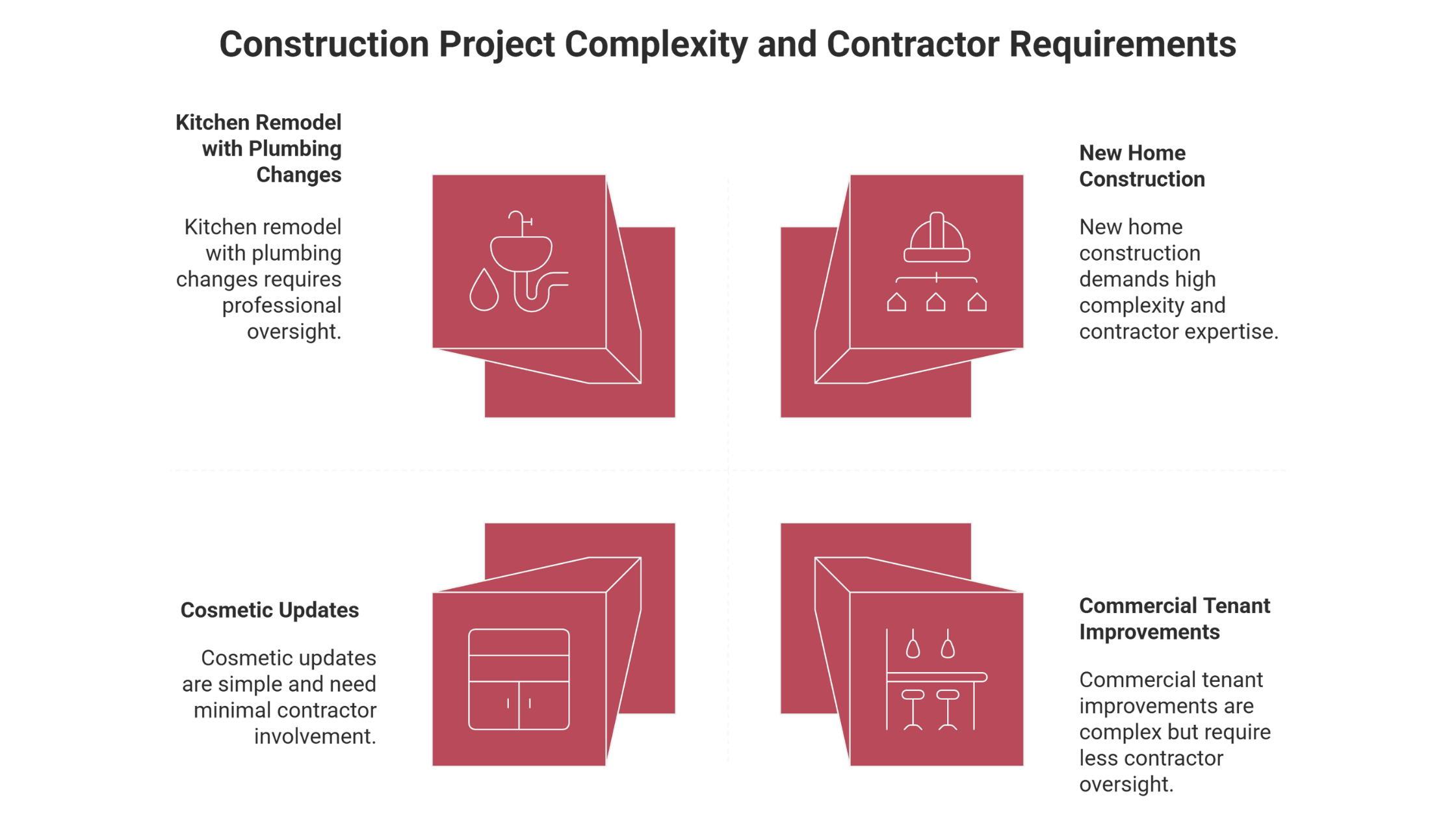
Denver’s building codes determine when you must hire a licensed contractor versus when you can handle work yourself. New construction, structural modifications, and multi-trade projects almost always require professional oversight. The metro area permitted approximately15,000-16,000 housing unitsin 2024, with roughly52% single-familyand 48% multifamily units, reflecting sustained demand across project types.
Home Building and Major Renovations
New home construction represents the most comprehensive project type, involving foundation work, framing, all major systems installation, and finish work. Denver requires licensed general contractors for ground-up builds, along with state-licensed electricians and plumbers for those specific trades. The process includes multiple inspection stages (footing, foundation, framing, rough-in, and final) each requiring sign-off before work continues.
Major renovations that alter your home’s structure or footprint similarly need contractor involvement. Home additions changing your square footage, second-story pop-tops, or significant layout reconfigurations all require building permits and professional oversight. Even substantial basement finishing projects need permits and coordination of multiple trades for egress windows, electrical, and proper moisture management in below-grade spaces.
Kitchen and bathroom remodels occupy a middle ground. Purely cosmetic updates (new cabinets, countertops, paint) typically don’t require permits or contractors. Once you’re moving plumbing, reconfiguring layouts, or touching electrical systems, Denver requires permits and often licensed contractors, particularly when work involves structural modifications or gas line changes.
Commercial Construction and Tenant Improvements
Commercial construction handles everything from ground-up office buildings to retail fit-outs. These projects require Class A or B general contractor licenses in Denver, along with compliance with commercial building codes addressing fire protection, accessibility, life-safety systems, and occupancy classifications. The permitting process involves more review steps and longer timelines than residential work.
Tenant improvements represent a specialized commercial niche where contractors modify existing commercial spaces for new occupants. A restaurant taking over a former retail space needs extensive work on kitchen systems, grease traps, fire suppression, and dining area finishes. These projects demand contractors who understand commercial MEP systems and can coordinate with building owners and tenants simultaneously.
How to Choose the Right General Contractor in Denver
Selecting the right contractor determines whether your project succeeds or becomes a cautionary tale.JROC Properties emphasizesthree core criteria when helping clients connect with contractors: verified credentials, relevant experience, and demonstrated communication skills. Start your search by gathering recommendations from real estate professionals, neighbors who’ve completed similar projects, and online review platforms, then systematically vet each candidate.
Verify Licensing, Insurance, and Bonding Requirements
Denver requires general contractors to hold city licenses classified by project scope: Class A for unlimited value projects, Class B for projects under specific thresholds, and Class C for smaller residential work. Verify active licensing through Denver’s Community Planning & Development office before serious discussions begin. Colorado’s Department of Regulatory Agencies also regulates specific trades like electrical and plumbing at the state level, so confirm any contractor’s subcontractors hold proper state credentials.
Insurance requirements protect both you and the contractor’s workers. General contractors should carry comprehensive general liability coverage, typically $1-2 million minimum, plus workers’ compensation for all employees and subs working on your property. Request certificates of insurance naming you as an additional insured, and verify coverage remains current throughout your project. Some lenders or local jurisdictions also require performance and payment bonds for larger projects, guaranteeing completion even if the contractor defaults.
Colorado’s construction trust fund law treats your payments as legally restricted funds that must go toward paying subcontractors and suppliers on your project. This protection only works when you hire properly licensed contractors who understand and follow these requirements.
Evaluate Experience with Your Project Type
Contractors develop expertise in specific project categories through repeated exposure to similar challenges. A builder specializing in custom mountain homes brings different skills than one focused on urban infill townhomes or commercial tenant improvements. Review each candidate’s portfolio for projects matching your scope, size, and complexity, paying attention to finish quality and design aesthetic.
Ask direct questions about similar projects completed in the past year or two. How many projects of this type and size do they typically manage simultaneously? Can they provide references from clients with comparable work? What went wrong on past projects similar to yours, and how did they resolve it? The best contractors speak honestly about challenges they’ve faced and lessons learned, particularly regarding Denver-specific issues like unexpected soil conditions or Historic Denver review processes.
Specialized systems or techniques require corresponding contractor knowledge. A contemporary home with floor-to-ceiling glass and complex waterproofing details demands different expertise than a traditional design. If your project includes unique elements (radiant floor heating, smart home integration, or commercial kitchen equipment) verify the contractor has successfully installed and troubleshot these systems before.
Check References, Reviews, and Portfolio Quality
Contact at least three recent references, focusing on projects completed within the past year. Ask whether the project finished on time and on budget, how the contractor handled unexpected issues, and whether they would hire this contractor again. Listen carefully to any hesitation or qualified answers, as references contractors provide should be their strongest endorsements.
Online reviews across multiple platforms (Google, Yelp, Houzz, Better Business Bureau) reveal patterns that individual references might not. Look for consistent themes in feedback, both positive and negative. A few complaints among dozens of glowing reviews likely reflect difficult clients or miscommunication. Patterns of missed deadlines, poor communication, or quality issues signal deeper problems worth avoiding.
Portfolio quality demonstrates a contractor’s attention to detail and finish standards. Review photos carefully, noting consistency in grout lines, paint edges, trim alignment, and overall craftsmanship. Top contractors document their work extensively and take pride in showcasing completed projects. Sparse portfolios or reluctance to show past work should raise questions about experience and quality.
Compare Communication Style and Project Management Approach
Your contractor becomes a business partner for the project’s duration, making communication compatibility essential. Schedule in-person consultations with your top candidates, paying attention to how they listen, explain processes, and respond to questions. Do they ask probing questions about your priorities, budget flexibility, and timeline constraints? Do their answers demonstrate genuine expertise, or do they rely on vague reassurances?
Project management approach separates organized professionals from those who wing it. Ask how they schedule subcontractors, track progress against timelines, and communicate updates to clients. Do they use project management software, maintain detailed schedules, and provide regular written updates? How do they handle change orders and scope modifications? Contractors with systematic processes tend to deliver more predictable outcomes.
Availability and responsiveness matter throughout construction. Contractors juggling too many projects simultaneously can’t provide the attention your project deserves. Ask about their current workload, typical response time for questions or concerns, and who serves as your primary point of contact if the principal isn’t available daily. Establish communication expectations (weekly meetings, daily text updates, formal progress reports) before signing contracts.
Understanding Denver Construction Costs and Pricing
Construction costs in Denver reflect local labor rates, material availability, and market demand. Understanding how contractors structure fees and what drives costs helps you budget accurately and evaluate bids fairly.
Factors That Impact Your Project Budget
Site conditions significantly influence costs, particularly for new construction and additions. Sloped lots require more foundation work and potentially retaining walls. Properties with expansive clay soils may need engineered foundations with deeper piers or stiffened slabs, adding thousands to foundation costs compared to stable soil conditions. Older homes often reveal hidden issues (outdated wiring, insufficient framing, or moisture damage) once walls open up. Contractors build contingencies into estimates for unknowns, typically 10-20% for remodels of older homes.
Material selection creates wide cost variation even within similar projects. Stock cabinets versus semi-custom versus fully custom represents a 200-300% price range for kitchen cabinetry alone. Tile, countertops, fixtures, flooring, and appliances all offer entry-level, mid-range, and luxury options with corresponding price points. Working with contractors who help prioritize spending where it matters most (durable infrastructure, key visual features) delivers better value than spreading budgets thin across all elements.
Labor availability and project timing affect costs throughout the year. Denver’s construction season peaks spring through fall, when contractors command premium rates and lead times extend. Winter projects sometimes offer scheduling advantages and modest discounts, though exterior work faces weather constraints. Projects requiring specialized trades (stone masons, custom metalwork, unique woodworking) cost more due to limited craftspeople and longer lead times.
How General Contractors Structure Their Fees
Contractors typically price work using one of three models. Fixed-price contracts establish a set price for defined scope, with the contractor absorbing cost overruns but potentially earning more if work runs efficiently. This approach works best when scope is clearly defined and plans are complete. Contractors build overhead and profit margins into fixed prices, reflecting project risk, complexity, and market competition.
Cost-plus contracts reimburse actual project costs plus a fee, either a percentage of costs or a fixed management fee. This model provides more transparency into actual costs and works well for projects where scope evolves during construction. However, it requires trust and detailed documentation, since the contractor’s fee can grow as costs increase under percentage-based arrangements.
Time-and-materials pricing bills hourly labor rates plus materials at cost, sometimes with markups on materials. This approach suits small projects or punch-list work where scope is difficult to define precisely upfront. For substantial projects, most contractors and clients prefer fixed-price or cost-plus arrangements that provide better cost predictability.
Colorado law caps retainage (the amount withheld from progress payments until project completion) at 5% on most public projects and many larger private commercial projects. This protects contractors’ cash flow while ensuring owners maintain leverage for final completion and correction of any punch-list items.
The Hiring Process: From Quotes to Contract Signing
The contractor hiring process moves through distinct phases: initial research and outreach, consultation meetings, bid review, reference checking, and contract negotiation. Allow 3-4 weeks minimum for thorough vetting before committing to a contractor, particularly for projects exceeding $100,000.
Getting Multiple Detailed Bids
Request detailed written proposals from at least three contractors, more for very large projects. Provide identical project information (plans, specifications, material selections, and timeline expectations) to each contractor so bids remain comparable. Detailed bids break down costs by category (labor, materials, permits, general conditions, fee) rather than offering a single lump sum, making it easier to spot where pricing differs and why.
Expect bid preparation to take 1-2 weeks for straightforward projects and longer for complex work requiring subcontractor pricing or engineering input. Contractors offering “instant” or same-day bids on substantial projects likely haven’t priced carefully, increasing risk of lowball estimates followed by change orders. Similarly, bids landing significantly below others (25% or more) deserve skepticism about whether the contractor truly understands the scope or plans to cut corners.
Bid review meetings allow you to ask questions about specific line items, understand assumptions underlying the proposal, and gauge the contractor’s grasp of your project. Red flags include vague descriptions, missing elements that competitors included, reluctance to discuss pricing details, or pressure to sign immediately.
Essential Questions to Ask During Consultations
National Association of Home Builders guidance recommends asking contractorshow long they’ve beenin business, what their approach to projects like yours looks like, and how many similar projects they completed recently. Request reference lists from those recent projects, focusing on work completed within the past year rather than aging examples from five or ten years ago.
Verify insurance and workers’ compensation coverage directly. Ask, “Does your company carry workers’ compensation and liability insurance?” and request certificates proving current coverage. Contractors without proper insurance expose you to liability if workers are injured on your property.
Financial questions prevent surprises later. Ask, “Will you provide a written fixed-price proposal that includes all project costs, including plans, labor, and materials?” Comprehensive proposals reduce ambiguity and provide a clear basis for comparing contractors. Also discuss payment schedules, deposit requirements, and how change orders will be priced and approved.
For Denver projects specifically, ask whether the contractor regularly works with local geotechnical engineers for soil reports, understands Historic Denver review processes if relevant to your property, and has experience navigating Denver’s energy code requirements that often exceed state minimums.
What to Look for in a Construction Contract
Colorado construction contracts should include detailed scope of work, referencing architectural plans and specifications by date and version. Payment terms must spell out total price, deposit amount, progress payment milestones, retainage percentage, and final payment conditions. Clear change order procedures describing how modifications get priced, approved, and incorporated prevent disputes when adjustments become necessary.
Timeline provisions specify start date, substantial completion date, and final completion date, along with how weather delays, material shortages, or owner-caused delays affect the schedule. Warranty terms covering workmanship and materials, typically one to two years beyond completion, should identify what’s covered and how warranty claims get submitted and resolved.
Legal provisions include choice of law, dispute resolution procedures, attorney fee allocation, and mechanics’ lien information. Colorado’s mechanic’s lien law allows unpaid contractors and subcontractors to file liens against your property, so contracts should require lien waivers with each payment and explain how lien rights are preserved or waived throughout the project.
Payment Schedules and Deposit Expectations
Colorado doesn’t cap deposit amounts by statute, but industry practice typically limits upfront payments to 10-30% of the total contract price. Deposits cover initial mobilization, permitting costs, and material deposits. Avoid contractors demanding 50% or more upfront, particularly if they cite “material purchases” for items that haven’t been ordered or won’t arrive for weeks.
Progress payments tied to completed milestones balance contractor cash flow needs with owner protection. Common milestones include completion of foundation, framing, rough-in (plumbing, electrical, HVAC), drywall, and final completion. Each payment represents work in place, with Colorado’s 5% retainage cap applying on many projects until the final walkthrough and punch-list completion.
Colorado’s construction trust fund law treats progress payments as restricted funds that must pay project subcontractors and suppliers before the general contractor uses any money for other purposes. Request conditional lien waivers from major subcontractors before releasing each progress payment, ensuring your money actually flowed to the workers and suppliers it was intended to pay.
Working Successfully with Your Denver Contractor
Project success depends on effective collaboration between owner and contractor. Clear expectations, regular communication, and mutual respect smooth inevitable challenges that arise during construction.
Timeline Expectations and Project Milestones
Realistic timelines account for permitting, material lead times, subcontractor scheduling, and inspection coordination. Simple remodels might complete in 6-8 weeks, while major renovations typically require 3-6 months. New home construction spans 6-12 months depending on size, complexity, and weather impacts. Custom elements (specialty tile, custom cabinetry, imported fixtures) extend schedules significantly, sometimes requiring 12-16 week lead times.
Denver’s building department review and inspection schedules affect timelines. Permit approval can take 2-8 weeks depending on project complexity and current department workload. Each inspection stage (footing, foundation, framing, rough-in, final) requires scheduling and may involve re-inspections if issues arise. Projects in historic districts face additional review layers that can extend timelines by weeks or months.
Weather impacts outdoor work significantly in Denver’s climate. Foundation pours, roofing, and exterior finishing work all face weather constraints during winter months. Contractors typically pad schedules for weather contingencies, particularly on projects scheduled across multiple seasons. Understand that some delays reflect conditions beyond the contractor’s control rather than poor planning.
Handling Change Orders and Budget Adjustments
Change orders document scope modifications, price adjustments, and timeline impacts usingstandardized formslike AIA G701 or ConsensusDocs templates. Best practice requires written change orders signed by both parties before work proceeds, preventing disputes about what was approved and at what price. Maintain a comprehensive log tracking all change orders throughout the project lifecycle, recording status, cost impact, and schedule effects.
Some changes are unavoidable: hidden structural issues discovered during demolition, unexpected soil conditions requiring foundation redesign, code requirements clarified during permitting, or material discontinuations forcing substitutions. Others reflect owner preferences evolving as the project takes shape. Budget 10-15% contingency for the former and maintain discipline about the latter to avoid budget overruns.
Structured approval workflows ensure transparency around changes. Contractors should provide written pricing and timeline impacts before proceeding with modifications, allowing you to make informed decisions about whether the change delivers sufficient value.
Ensuring Quality Through Inspections and Communication
Building department inspections verify code compliance at critical stages: foundation, framing, rough systems, and final completion. These official inspections catch life-safety issues but don’t address workmanship quality or finish details. Conduct your own regular site visits, ideally weekly, to review progress and identify concerns while they’re still easy to address.
Communication channels should be established upfront. Weekly meetings or calls provide regular touchpoints for progress updates, upcoming decisions, and any issues needing attention. Many contractors now use project management apps providing real-time photo updates, schedule visibility, and messaging capabilities that keep everyone aligned.
Document concerns in writing, ideally with photos, when quality issues arise. Professional contractors appreciate clear feedback and address problems promptly. Raising concerns early prevents them from being covered up by subsequent work. For finish details, most contracts include punch-list walkthroughs before final payment, where you identify minor corrections needed before the contractor fully completes the project.
Red Flags to Avoid When Hiring a Contractor
Several warning signs indicate contractors to avoid. Door-to-door solicitations claiming contractors are “working in your neighborhood” with leftover materials represent a classic scam tactic. Legitimate contractors stay busy through referrals and don’t need to cold-call neighborhoods.
Pressure for immediate decisions and large upfront payments signals trouble. Contractors demanding 50% or more before starting work, particularly when insisting on cash payment, often disappear once they receive money. Similarly, “today-only” pricing and claims of limited-time material availability push you into hasty decisions you may regret.
Vague contracts or reluctance to provide written agreements indicate unprofessional operations. Every construction project needs detailed written contracts specifying scope, materials, timeline, payment terms, and responsibilities. Contractors who resist written agreements or offer contracts missing key details likely plan to walk away from problems or dispute what was promised.
Unlicensed contractors asking you to pull required building permits yourself, claims they’ll get better prices by paying cash to suppliers or subs, and refusal to provide proof of insurance all represent serious red flags. These shortcuts expose you to liability, compromise quality, and potentially violate Denver and Colorado construction regulations.
Top 3 Tips for Hiring the Right Denver General Contractor
Based on experience connecting Denver homeowners with contractors for renovations, three strategies consistently lead to successful project outcomes:
Prioritize Denver-specific experience over price:The lowest bid rarely delivers the best value. Contractors with proven track records in your project type who understand Denver’s clay soil challenges, high-altitude material requirements, and local code nuances justify premium pricing through reliability and accountability. Ask specifically about their experience with Denver’s unique conditions: how they handle expansive soil issues, whether they regularly specify geotechnical investigations, and how familiar they are with Historic Denver review processes if relevant.
Verify credentials independently:Don’t rely on contractors’ claims about licensing, insurance, or references. Use Colorado DORA’s license lookup for trade licenses, Denver’s contractor licensing database for general contractor credentials, and actually call references to verify claims. This due diligence takes a few hours and prevents thousands in potential losses from unlicensed or underinsured contractors.
Establish clear communication protocols:Successful projects require regular, structured communication about progress, decisions, concerns, and budget. Define communication expectations in your contract (weekly meetings, daily photo updates, response-time standards for questions) and hold contractors accountable. Partners who communicate proactively and transparently tend to deliver projects that meet or exceed expectations.
Conclusion
Finding the right denver general contractorsrequires balancing multiple factors: credentials, experience, communication skills, pricing, and cultural fit. Denver’s robust construction market offers numerous qualified professionals, but thorough vetting separates contractors who deliver exceptional results from those who create costly problems. Verify licensing through official channels, review past work carefully, obtain detailed written bids, and prioritize contractors who demonstrate familiarity with Denver’s unique construction challenges.
JROC Properties has built relationships withtrusted contractorsacross the Denver metro area through years of helping clients prepare properties for sale and execute value-adding renovations. Their vendor network includes specialists carefully vetted for licensing, quality, and professionalism.
Whether you’re planning a kitchen refresh, considering an ADU to maximize property value, or embarking on a complete home transformation, starting with qualified local contractors who understand Denver’s clay soils, altitude considerations, strict energy codes, and neighborhood regulations sets your project up for success.Contact JROC Propertiesto discuss your project goals and connect with contractors who can bring your vision to life while protecting your investment every step of the way.