
As Is Home Sale: Complete Buyer’s Guide

An as is home sale can be one of the best opportunities in Colorado real estate, or one of the most expensive mistakes you ever make. The difference comes down to how well you prepare before writing an offer. At JROC Properties, we help buyers across Boulder County, Denver, and Northern Colorado evaluate as-is properties with confidence, so they know exactly what they are getting into before committing a dollar. If you are actively buying a home in Colorado, understanding how as-is sales work is essential.
This guide walks you through every step of buying a house as-is: what the term actually means, how to protect yourself with inspections, financing options, negotiation tactics, and when to walk away.
Considering an As-Is Property in Colorado?
JROC Properties helps buyers evaluate as-is homes, estimate repair costs, and negotiate smarter. Our team combines real estate expertise with hands-on construction knowledge so you can buy with confidence. Talk to our team →
TL;DR: As Is Home Sale
An as is home sale means the seller will not make repairs or offer credits for property issues before closing. It does not mean the home is worthless or that the buyer has no protections. You can (and should) still get an inspection, negotiate on price, and include contingencies. Properties sold as is often come from estate sales, financial distress, or deferred maintenance situations, and they can represent significant value for buyers willing to take on renovation work. Financing options include conventional loans, FHA 203(k) rehabilitation loans, and cash purchases, though some lenders restrict loans on properties with major deficiencies. Smart buyers get thorough inspections, estimate repair costs accurately, and work with experienced agents who understand both construction and real estate.
Key Points
- As-is does not mean no inspection: buyers can and should still inspect the property before closing.
- Sellers must still disclose known defects: as-is only removes the obligation to repair, not the duty to disclose.
- Common reasons homes sell as-is: estate sales, financial distress, investor flips, and deferred maintenance.
- Financing is possible: FHA 203(k), VA renovation loans, and conventional options exist, but some lenders restrict loans on properties with major issues.
- Negotiate on price, not repairs: use inspection findings to justify a lower offer rather than asking for fixes.
- Know when to walk away: foundation damage, environmental hazards, and code violations can turn a deal into a money pit.
Work with the right team: an agent with construction knowledge helps you estimate costs and avoid costly surprises.
Table of Contents
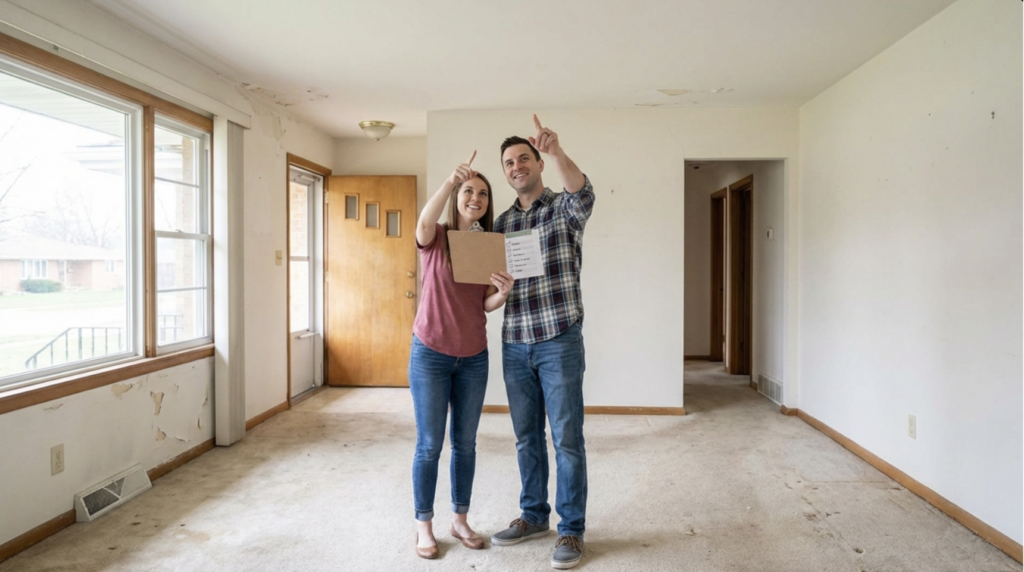
What Does Buying a House As-Is Actually Mean?
The term gets thrown around a lot, but what does buying a house as is mean in practical terms? It is simpler than most people think, and less risky than it sounds if you approach it correctly.
Legal Definition and Seller Obligations
In an as is home sale, the seller agrees to sell the property in its current condition. They will not make repairs, improvements, or offer credits for defects discovered during the buying process. However, sellers in Colorado are still legally required to complete a Seller’s Property Disclosure form. As-is removes the obligation to fix problems, not the duty to tell you about them.
What As-Is Does Not Mean: Common Misconceptions
Many buyers assume “as-is” means the home is falling apart or that they cannot negotiate. Neither is true. Some properties sold as is are in perfectly livable condition. The seller simply does not want the hassle of handling repair requests. Others assume they cannot get an inspection or must waive all contingencies. You absolutely can protect yourself, and you should.
As-Is vs. Traditional Home Sales
In a traditional sale, buyers often negotiate repairs or credits after the inspection. In an as-is sale, that repair negotiation is off the table. But price negotiation is still fair game, and inspection contingencies can still be included in your offer. The biggest difference is in expectations: both sides go in knowing the seller will not fix anything.
Traditional Sale | As-Is Sale | |
Seller repairs | Negotiable after inspection | Not offered |
Buyer inspection | Standard | Still recommended |
Seller disclosure | Required | Still required |
Price negotiation | Based on condition and market | Based on condition and estimated repair costs |
Typical timeline | 30 to 45 days | Often faster, 14 to 30 days |
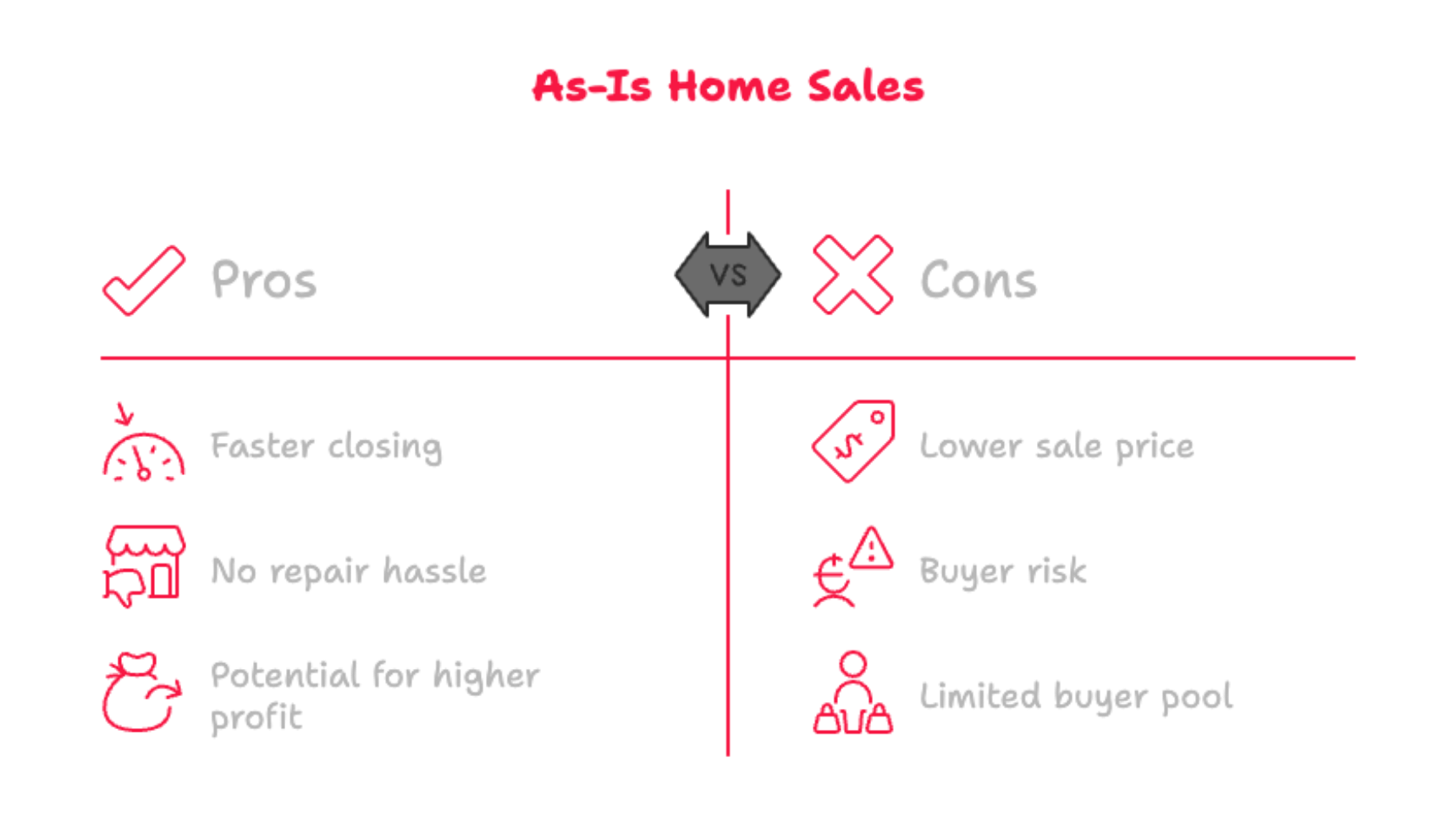
Why Homes Are Sold As-Is: What It Signals to Buyers
Understanding why a property is being sold as-is helps you assess risk before you ever schedule a showing. The reason behind the listing tells you a lot about what you might find inside.
Financial Distress Situations
Sellers facing foreclosure, divorce, or job loss often list as-is because they need to close quickly and cannot afford to invest in repairs. According to Redfin, these situations can create real opportunities for buyers, but they also mean the home may have years of deferred maintenance.
Inherited Properties and Estate Sales
Heirs who inherit a property frequently sell as-is because they live out of state, do not know the home’s full condition, or simply want to liquidate the asset. As HomeLight explains, estate sales are among the most common sources of as-is listings and can range from well-maintained homes to properties that have not been updated in decades.
Investor-Owned Properties and Major Repair Issues
Investors sometimes sell as-is when a property no longer fits their portfolio or needs more work than they want to put in. Other times, homeowners list as-is because they know the home has significant issues (roof damage, foundation concerns, outdated electrical) and prefer a clean sale over managing a repair project. If you are exploring real estate investment in Denver, as-is properties can offer strong upside when the numbers work.
Buying a House As-Is With (or Without) Inspection
This is where most buyers either protect themselves or set themselves up for disaster. The inspection is your single best tool when buying a house as-is.
Your Right to Inspect As-Is Properties
As-is does not mean “no inspection allowed.” In Colorado, buyers have the right to conduct a home inspection on any property unless they voluntarily waive that right in the contract. As U.S. News Real Estate notes, a professional inspection costs a few hundred dollars and can save you tens of thousands by revealing problems you would not catch on a walkthrough. Our guide on home inspection red flags covers the most critical issues to watch for.
What Happens After the Inspection Results
If the inspection uncovers problems, you have three options: renegotiate the purchase price to account for repair costs, accept the findings and proceed at the agreed price, or exercise your inspection contingency and walk away. In an as is home sale, asking the seller to fix issues is typically not an option, so your leverage is in the price.
Essential Inspections You Should Not Skip
- General home inspection: covers structure, roof, HVAC, plumbing, and electrical.
- Sewer scope: critical for older Colorado homes where root intrusion and deteriorated clay pipes are common.
- Radon testing: Colorado has some of the highest radon levels in the country. Always test.
- Foundation assessment: if the general inspection flags cracks or settling, bring in a structural engineer.
Skipping inspections to make your offer more competitive on an as-is property is one of the most expensive gambles a buyer can take. The cost of an inspection is a fraction of what a hidden foundation or sewer problem will cost to fix.
Financing an As-Is Home Purchase
One of the biggest misconceptions about as-is properties is that you need cash to buy one. While cash offers do have advantages, several Colorado home loan options can work for as-is purchases.
Conventional and Government-Backed Loans
Conventional lenders will finance as-is properties as long as the home meets minimum habitability standards: functioning HVAC, intact roof, safe electrical, and no major health hazards. FHA and VA loans have stricter property requirements, but both offer renovation loan products designed specifically for homes that need work. Factor in average closing costs in Colorado when calculating your total out-of-pocket expense.
Renovation Loans for As-Is Purchases
FHA 203(k) loans let you roll the purchase price and renovation costs into a single mortgage. This is a strong option for buyers who find an as-is property in a great location but need to budget for updates. VA renovation loans offer a similar structure for eligible veterans. If you need help navigating mortgage options in Colorado, JROC Properties can connect you with lenders who specialize in these products.
Cash Buyers and Competitive Advantage
Cash buyers have a clear edge in as-is transactions. They close faster, skip appraisal contingencies, and remove lender-related obstacles that can kill deals on properties with condition issues. For investors and buyers with liquidity, as-is properties often offer the best entry points in Colorado’s competitive market.
Top 5 Negotiation Strategies for As-Is Home Sales
Just because the seller will not fix anything does not mean you have no leverage. Smart negotiation is how buyers turn as-is deals into great investments.
- Lead with inspection data. Present repair estimates from licensed contractors, not guesses. A $15,000 foundation repair quote gives you concrete justification for a price reduction.
- Negotiate price, not repairs. In an as is home sale, your leverage is the offer price. Reduce it by the estimated cost of necessary repairs plus a margin for unknowns.
- Request closing cost credits. If the seller will not budge on price, ask for seller-paid closing costs. This effectively lowers your out-of-pocket expense without changing the sale price.
- Shorten your timeline. As-is sellers often prioritize speed. Offering a 14 to 21 day close with fewer contingencies (while keeping your inspection contingency) makes your offer more attractive.
- Include an inspection contingency with a short window. A 5 to 7 day inspection period shows the seller you are serious while still protecting your ability to walk away if the property has deal-breaking issues.
JROC’s construction background gives our buyers a real advantage here. We can estimate repair costs on site, so you know whether the numbers work before you make an offer.
Need Help Evaluating an As-Is Property?
JROC Properties brings construction expertise and real estate knowledge together to help you assess as-is homes accurately. We estimate repair costs, identify deal-breakers, and negotiate on your behalf. Get a free consultation →

Pros and Cons of Buying a Home As-Is
Every as-is deal carries a unique risk-reward profile. Here is an honest breakdown to help you decide whether an as-is property fits your situation.
Benefits: Lower Price and Less Competition
As-is homes typically sell below market value because the seller has priced in the condition issues. This discount can be substantial, especially on properties with cosmetic problems that are inexpensive to fix. You also face less competition because many buyers avoid as-is listings entirely, which gives you more negotiating room. For buyers willing to take on renovation work, the equity upside can be significant. If you are thinking about building equity through improvements, our home improvement guide for Colorado covers which upgrades deliver the best return.
Drawbacks: Hidden Costs and Financing Challenges
The biggest risk in any as is home sale is what you do not know. Cosmetic issues are easy to spot, but structural problems, hidden water damage, mold behind walls, and failing sewer lines are not. Repair costs can escalate quickly, and some lenders will not finance properties with major deficiencies. Insurance can also be harder to secure on homes with outdated electrical, roofing issues, or other safety concerns.
Who Should Consider As-Is Properties
As-is purchases tend to work best for cash buyers, experienced renovators, real estate investors, and buyers who have a trusted contractor relationship and a realistic understanding of renovation costs. First-time buyers can succeed with as-is purchases too, but they need strong professional guidance. If you are exploring Colorado real estate investing, as-is properties are one of the most reliable paths to below-market acquisition.
Evaluating As-Is Properties: When to Buy and When to Walk Away
Not every as-is deal is a good deal. Knowing where the line is between “fixable” and “money pit” protects your finances and your sanity.
Red Flags That Should Make You Walk Away
- Major foundation damage: cracks wider than a quarter inch, significant settling, or bowing basement walls signal structural problems that can cost $20,000 to $100,000 or more to repair.
- Environmental hazards: asbestos, lead paint in poor condition, mold throughout the structure, or underground storage tanks create liability and remediation costs that can exceed the home’s value.
- Extensive code violations: unpermitted additions, illegal electrical work, or failed septic systems can require full demolition and rebuild of affected areas.
- Active pest infestation: termite damage to structural members, or evidence of long-term rodent infestation in walls and attic, indicates problems that go far beyond extermination.
For a deeper look at what to watch for, review our guide on home inspection red flags. And if you are on the other side of the transaction, our article on what not to fix when selling a house explains the seller’s perspective on as-is pricing decisions.

How to Estimate Repair Costs Accurately
Get at least two contractor bids on any major issue flagged during inspection. Add a 15% to 20% contingency buffer for surprises, which are common in older Colorado homes with multiple layers of past renovations. Compare your total estimated renovation cost plus purchase price against the home’s after-repair value. If the math does not leave you with meaningful equity, the deal is not worth the risk.
Conclusion
An as is home sale can deliver real value for buyers who do their homework. The key is approaching every as-is property with a clear process: get a thorough inspection, estimate repair costs with professional help, understand your financing options, and negotiate based on data rather than emotion. The buyers who succeed with as-is purchases are the ones who prepare thoroughly and work with professionals who understand both construction and real estate.
Founded by Jami and Rocco Montana, JROC Properties brings together hands-on construction experience and deep real estate expertise under one roof. Serving Boulder County, Denver, Longmont, and Northern Colorado, our team helps buyers evaluate as-is properties with the clarity and confidence that only comes from knowing what repairs actually cost. Whether you are looking at your first home or your next investment property, JROC helps you make decisions based on facts, not guesses.
Ready to Explore As-Is Properties in Colorado?
JROC Properties provides real estate guidance and construction expertise throughout Boulder County, Denver, and Northern Colorado. Let us help you find the right property, evaluate the risks, and negotiate a deal that works. Get started with JROC Properties →