
First-Time Home Buyer Colorado Requirements Guide
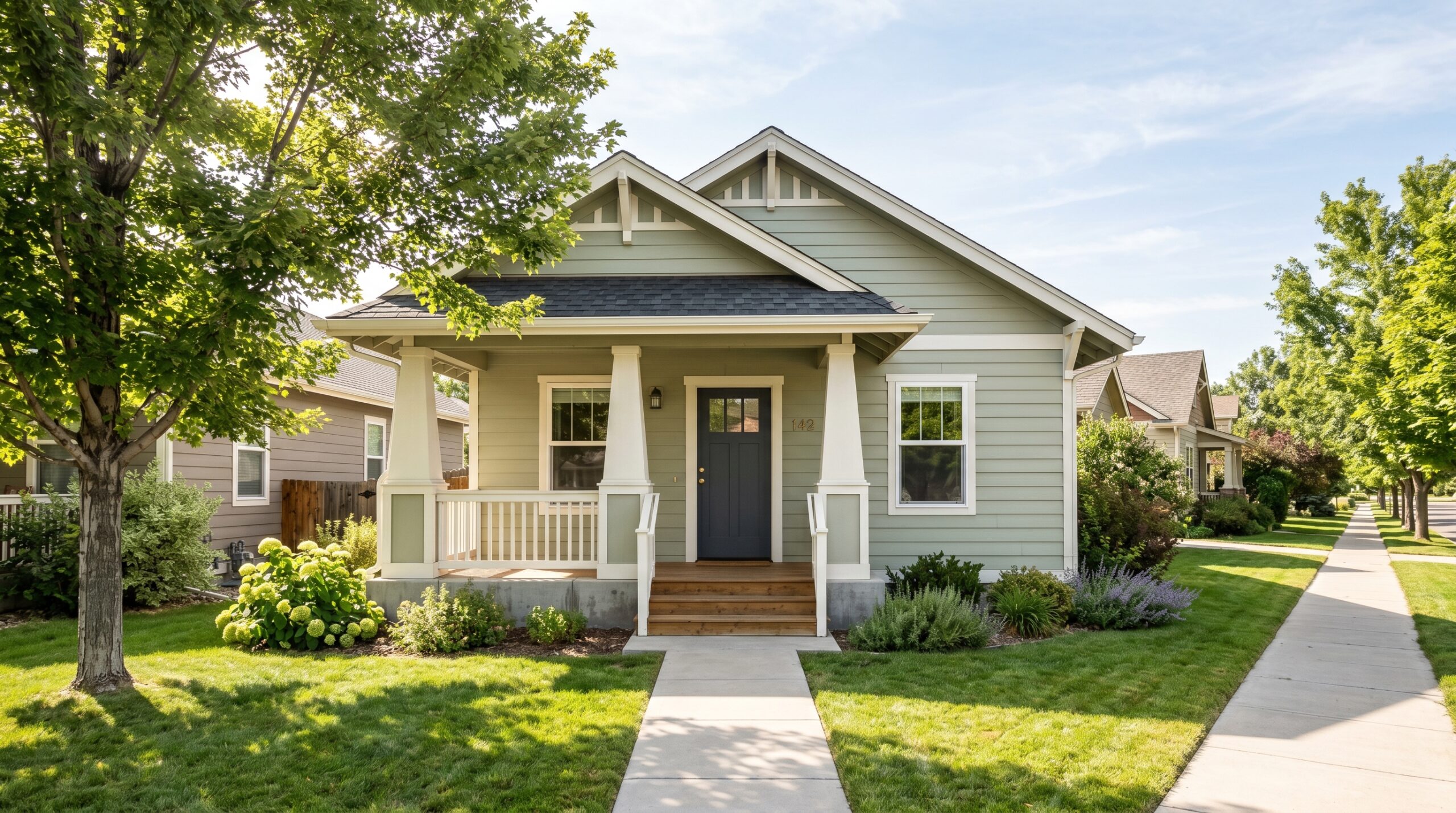
First-Time Home Buyer Colorado Requirements: A Local Buyer’s Guide
First-time home buyer Colorado requirements come down to four things: credit, income, down payment, and the program you qualify for. Hit all four and you have real options, often with as little as zero to 3.5% down. Miss one and the path narrows fast. The team at JROC Properties helps first-time buyers run the actual numbers on credit minimums, debt-to-income ratios, and down payment assistance programs before they tour homes, so the offer they write is one a lender will actually fund.
This guide walks through what counts as a first-time buyer in Colorado, the four pillars of eligibility, the major loan programs (CHFA, FHA, VA, Conventional 97, USDA), and the documents and steps to get pre-approved without surprises.
Want a clear path to your first Colorado home?
The JROC Properties team helps Colorado first-time buyers match credit, income, and savings to the right loan program before they tour homes. → Book a quick call
TL;DR
First-time home buyer Colorado requirements break into four pillars: credit (580+ for FHA, 620+ for conventional and CHFA), income and DTI (up to 50% on FHA, plus income limits on CHFA programs), down payment (as low as 0% with VA or USDA, 3% with Conventional 97, 3.5% with FHA), and property and occupancy (primary residence within 60 days of close). Colorado’s biggest first-time buyer asset is CHFA, which offers a 3% down payment grant (no repayment) or a 4% second mortgage (deferred repayment), both capped at $25,000 and layered on top of FHA, VA, or conventional financing. A first-time buyer with a 620 score and CHFA assistance can often close a Front Range home with under $20,000 cash plus closing costs.
Key Points
- “First-time” means no principal residence ownership in the past 3 years.
- Credit minimums: 580 FHA, 620 conventional and CHFA, no fixed VA minimum (lender overlays usually 580+).
- DTI caps: up to 50% FHA, 45% conventional, 41% VA. CHFA allows up to 50% for 620-659 credit, up to 55% for 660+.
- Down payment minimums: 0% VA/USDA, 3% Conventional 97 / HomeReady, 3.5% FHA.
- CHFA assistance: 3% grant (no repayment) or 4% second mortgage (deferred), both capped at $25,000.
- Homebuyer education is required for CHFA and most local DPA programs (about $75, 4 to 8 hours online).
- Documents needed: 2 years tax returns, 2 months bank statements, 30 days pay stubs, ID, asset statements.
Table of Contents

What Counts as a First-Time Home Buyer in Colorado
The definition matters because it determines which programs you can apply for and which down payment assistance grants you qualify to receive. The IRS and most Colorado lenders define a first-time home buyer as someone who has not owned a principal residence in the past three years. The clock runs from the date you sold your previous home, not the date of your current purchase.
That window allows for flexibility. If you owned a home four years ago but have rented since, you usually count as a first-time buyer again for most program purposes. If you inherited a home and immediately sold it without occupying it, that ownership generally does not disqualify you. Investment properties typically do not disqualify either, since the requirement applies specifically to principal residences.
Spouse ownership history counts. If you have never owned a home but your spouse owns or owned a primary residence in the past three years, you both fail the first-time buyer test for joint applications. Some programs allow non-applicant spouse exceptions, so check the specific rules before assuming you are out.
The definition also includes less obvious categories. Single parents who only owned a home with a former spouse may qualify as first-time buyers under certain CHFA and HUD programs. Displaced homemakers (people who lost a spouse and are re-entering homeownership) often qualify. Veterans typically qualify regardless of ownership history under VA loan programs. CHFA’s FirstGeneration program targets buyers whose parents never owned a home, regardless of the applicant’s own ownership history. The full landscape of Colorado options is covered in our Colorado down payment assistance guide.
Lenders verify ownership history during pre-approval through tax returns (looking for past mortgage interest deductions) and credit history. If you think you qualify but the lender finds prior homeownership inside the three-year window, the FirstStep or HomeReady products you were eyeing may close to you. Confirming status before building a strategy around a specific program saves weeks.
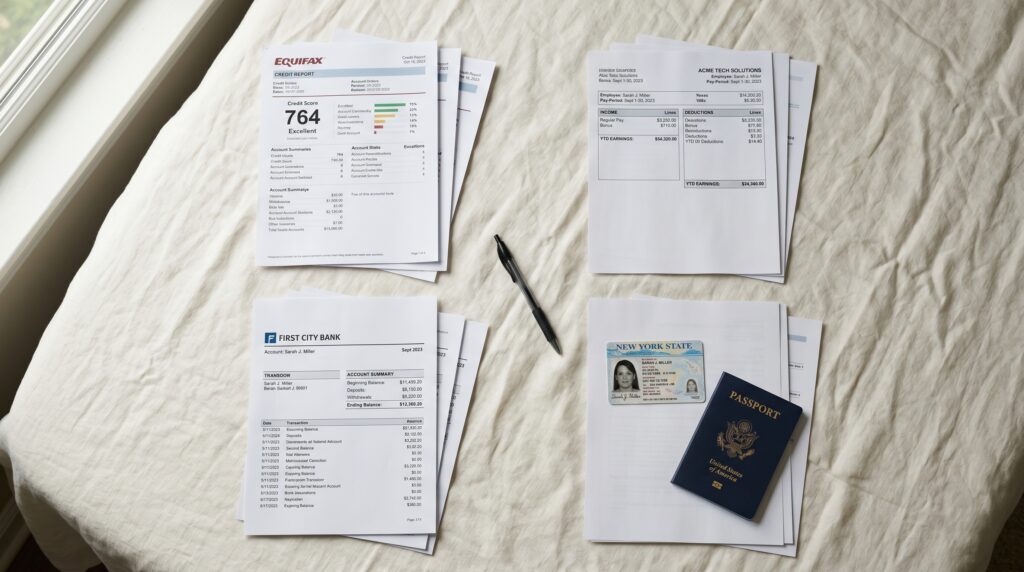
First-Time Home Buyer Colorado Requirements: The Four Pillars
First-time home buyer Colorado requirements fall into four pillars: credit score, income and debt-to-income ratio, down payment and reserves, and property and occupancy. Each pillar has different minimums depending on which loan program you choose. The pillar where most first-time buyers stumble is debt-to-income, often because they did not realize how much their student loan, car payment, or credit card minimums chip away at their qualifying income. A clean understanding of all four lets you target the right program and avoid a mid-process denial.
Credit Score Requirements
Credit minimums vary significantly by loan program. FHA loans allow scores as low as 580 with the standard 3.5% down payment, or down to 500 with 10% down. Conventional loans typically require 620, though lenders often look for 660 to qualify for the lowest mortgage insurance premiums. CHFA requires a 620 minimum across all its programs, including FirstStep and Preferred. VA loans technically have no fixed minimum, but most Colorado VA lenders apply overlays of 580 to 620. Background reading on credit health for lending purposes is available from the Consumer Financial Protection Bureau.
Your credit score also affects your interest rate, sometimes more than your loan choice. A 720 score on conventional financing typically saves 0.5 to 0.75 percentage points over a 620 score, which translates to $130 to $200 per month on a $400,000 loan. If your score is in the 590 to 620 band, spending 60 to 90 days improving it before applying often pays for itself many times over the life of the loan. Our guide to getting the best mortgage rates in Colorado covers what actually moves a rate quote.
Income and DTI Requirements
Lenders measure your ability to repay using two ratios. Front-end DTI caps housing costs at 28 to 31% of gross monthly income for most programs. Back-end DTI caps total monthly debts at 43% for conventional, 50% for FHA with compensating factors, and 41% for VA with residual income consideration. CHFA is more flexible: up to 50% DTI for credit scores between 620 and 659, and up to 55% for scores 660 and above. Most Colorado first-time buyers hit the back-end cap before the front-end one, usually because of student loans, car payments, and credit card minimums.
Income limits also apply to specific programs. CHFA FirstStep has county-by-county income limits that run from around $140,000 to over $196,000 for one or two-person households in Front Range counties, with higher limits in targeted areas and for larger households. HomeReady and Home Possible cap household income at 80% of area median in most census tracts. Higher-income first-time buyers can still use FHA or VA loans, which have no income caps, but they lose access to CHFA grant assistance.
Down Payment and Reserves Requirements
Minimum down payment depends on the loan program. VA and USDA loans allow 0% down for eligible buyers. Conventional 97 (Fannie Mae HomeReady and Freddie Mac Home Possible) allows 3% down for first-time buyers. FHA requires 3.5%. Conventional non-first-time-buyer loans typically start at 5%, sometimes higher with credit overlays.
CHFA layers on top of these. The CHFA Down Payment Assistance Grant provides up to 3% of the first mortgage amount as a non-repayable grant, capped at $25,000. A separate CHFA Down Payment Assistance Second Mortgage option provides up to 4% with deferred repayment (due at sale, refinance, or payoff), also capped at $25,000. Either option layers on top of an FHA, VA, or conventional first-time buyer loan, effectively reducing out-of-pocket cash to a fraction of what national calculators suggest.
Most loan programs also require one to two months of housing payment reserves after closing. VA and FHA are more flexible on reserves than conventional. Reserves include checking, savings, money market, and the vested portion of retirement accounts (though retirement funds count at a reduced rate).
Property and Occupancy Requirements
First-time buyer programs require the home to be your primary residence. You typically must move in within 60 days of closing and live in the property for at least one year. Investment properties and second homes do not qualify for FHA, VA, USDA, or CHFA programs. Lenders verify occupancy through utility setup, mail forwarding, and homestead exemption filings.
Eligible property types vary by program. FHA allows single-family homes, FHA-approved condos, townhomes, and 2-4 unit properties if you live in one unit. VA and Conventional 97 follow similar rules. USDA loans require the property to be in an eligible rural area, which in Colorado includes parts of Weld, Larimer, Adams, and most counties outside the immediate Front Range metros. The home must also meet program-specific condition standards: FHA and VA appraisals include a property condition review, and homes with significant deferred maintenance (peeling paint, exposed wiring, missing handrails) may require seller repairs before close.
FTHB Eligibility
Four pillars of first-time buyer eligibility
Each pillar has different minimums depending on the loan program. The pillar most buyers miss is debt-to-income, not credit score.
The Four Pillars
- Credit Score580 FHA, 620 conventional and CHFA, no fixed VA minimum (580+ lender overlay).
- Income & DTIUp to 50% DTI on FHA, 55% on CHFA with 660+ credit. CHFA income caps by county.
- Down Payment0% VA/USDA, 3% Conventional 97, 3.5% FHA. CHFA grant up to $25,000 layered on top.
- PropertyPrimary residence within 60 days. Single-family, condo, or 2-4 unit (owner-occupied).
The right program is the one your weakest pillar still clears with margin to spare.
Sources: CHFA, FHA, VA, Fannie Mae guidelines
The four pillars rarely move in isolation. Strengthening your credit usually lowers your DTI capacity (because higher credit lines mean more available debt), and a smaller down payment often requires a higher credit score to offset the lender’s risk. The right strategy balances all four together rather than maximizing any one of them.

Colorado First-Time Buyer Loan Programs
Five loan programs do the heavy lifting for Colorado first-time buyers. Each has distinct credit, down payment, and eligibility rules. The right choice depends on your service history, target market, and credit profile.
CHFA FirstStep and Preferred
CHFA is Colorado’s housing finance authority. Their first-time buyer products bundle low-rate financing with down payment assistance. FirstStep targets first-time buyers and qualified veteran buyers, while Preferred opens to non-first-time buyers under certain income limits. Both require 620 credit, completion of a CHFA-approved homebuyer education course (about $75 and available online in 4 to 8 hours), and meeting income and purchase price limits by county. CHFA loans layer over FHA, VA, or conventional financing, so you are combining a state grant or second mortgage with a federal loan product. Full details and current limits live at CHFA’s official site.
FHA Loans
FHA loans are the most common first-time buyer product in Colorado. They allow 3.5% down with 580 credit, or 10% down with scores from 500 to 579. Maximum DTI runs to 50% with compensating factors. The downside is mortgage insurance premium (MIP), which lasts the life of the loan if you put less than 10% down. Most FHA borrowers eventually refinance into conventional once they cross 20% equity to shed the MIP. FHA loan limits in Colorado range from about $524,000 to over $1.2 million depending on the county.
VA Loans
VA loans are the best deal in residential lending for eligible veterans, active-duty service members, and qualifying spouses. Zero down, no PMI, no income limits, and typically a lower interest rate than conventional. The VA funding fee runs 1.25 to 3.3% of the loan, financed into the loan amount. Maximum DTI is 41% with attention to residual income (cash left after monthly obligations). The catch is eligibility: you need a Certificate of Eligibility, which requires verified service. Eligibility specifics live at the VA home loans page. Our guide to VA loan assumption in Colorado covers how VA loans work in resale markets.
Conventional 97 (HomeReady and Home Possible)
Fannie Mae HomeReady and Freddie Mac Home Possible allow 3% down for first-time buyers. Income limits cap household income at 80% of area median in most census tracts. Credit minimum is 620. The advantage over FHA is private mortgage insurance (PMI) instead of MIP: PMI drops automatically at 78% loan-to-value, while FHA MIP often stays for the life of the loan. Best for first-time buyers with strong credit and modest income who plan to stay in the home long enough to build equity. Full program details live at Fannie Mae’s HomeReady page.
USDA Rural Development Loans
USDA loans allow 0% down for properties in eligible rural areas. In Colorado, eligible areas include parts of Weld, Larimer, Adams counties, plus most of the eastern plains and Western Slope. Income limits apply and credit minimums run around 640. The catch is property location: most Front Range buyers will not qualify based on geography alone. Property eligibility maps and income caps are published by USDA Rural Development.
Side-by-side, the major program differences look like this:
| Program | Min Credit | Min Down | Max DTI | Mortgage Insurance |
|---|---|---|---|---|
| CHFA FirstStep | 620 | 0% with grant | 50-55% | Depends on layered loan |
| FHA | 580 | 3.5% | 50% | MIP for life if <10% down |
| VA | None (580+ overlay) | 0% | 41% | None (funding fee) |
| Conventional 97 | 620 | 3% | 45% | PMI until 78% LTV |
| USDA | 640 | 0% | 41% | Annual 0.35% fee |
Combining the right loan product with CHFA assistance is where most Colorado first-time buyers find their best deal. A full comparison of the major options lives in our Colorado home loans guide.
Need help matching your file to the right program?
The JROC team helps Colorado first-time buyers stack CHFA assistance, FHA financing, and local DPA programs into the cheapest path to closing. → Get a custom plan
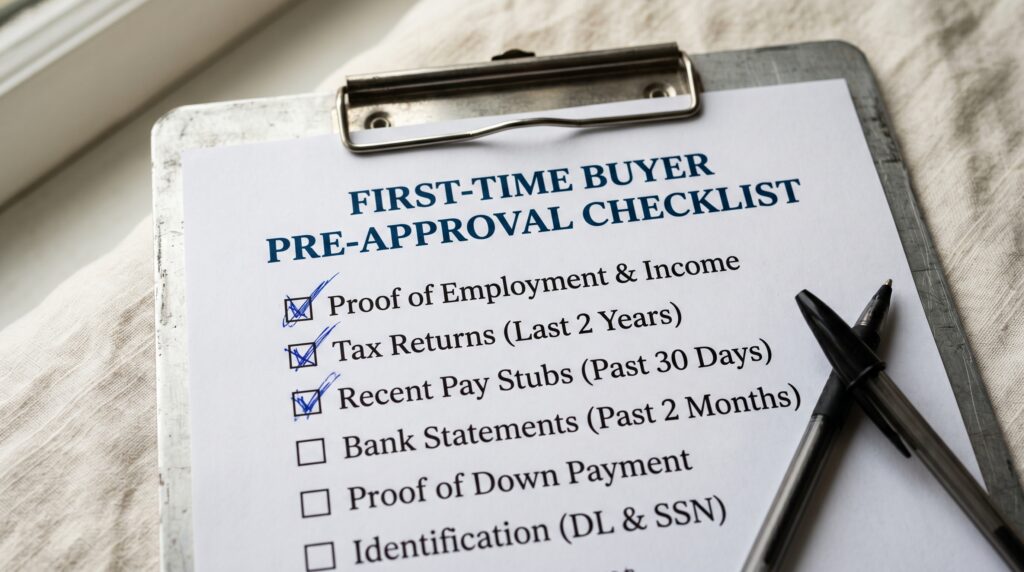
How to Get Pre-Approved as a Colorado First-Time Buyer
Pre-approval is less mysterious than it sounds. Done in order, the steps below get most Colorado first-time buyers from cold start to a lender’s commitment letter in two to four weeks.
- Pull your credit reports. Free annual reports are available at annualcreditreport.com. Review for errors, paid-off accounts still showing balances, and authorized user accounts you can drop to clean up the file.
- Calculate your DTI. Add up all minimum monthly debt payments (cars, student loans, credit cards, child support) and divide by gross monthly income. Knowing this number before you apply prevents the most common pre-approval surprises.
- Gather your document package. Two years of tax returns, 30 days of pay stubs, two months of bank statements, government photo ID, and asset statements for any investment accounts. Self-employed buyers add a year-to-date profit and loss statement.
- Complete homebuyer education if pursuing CHFA. The course runs about $75 and takes 4 to 8 hours online. Without the completion certificate, CHFA programs are closed to you.
- Apply with 2 to 3 lenders within a 14-day window. Multiple credit pulls inside that window count as one inquiry for scoring purposes. Comparing rates, lender fees, and CHFA experience matters more than people realize. Closing cost context lives in our Colorado closing costs guide.
The best lender for a first-time Colorado buyer is one who has closed dozens of CHFA-layered FHA and VA loans. Lenders new to CHFA often miss filing deadlines or mishandle the grant disbursement, which can delay closing or, worse, kill the assistance entirely.
Top 5 Mistakes First-Time Colorado Buyers Make
These are the patterns JROC sees most often when reviewing first-time buyer files in Colorado.
- Maxing out the lender’s pre-approval cap. Lenders approve based on DTI, not lifestyle. Their max rarely matches what leaves you comfortable after the move.
- Opening or closing credit during the application window. A new car loan, store card, or even a paid-off credit card closure can move your score 30 to 60 points and disqualify you from the program you were approved for.
- Skipping the homebuyer education course. Without the certificate, CHFA assistance is off the table. Take it early, not the week before closing.
- Ignoring property condition requirements. FHA and VA appraisals review the home for safety hazards (peeling paint, exposed wiring, missing handrails). A failed appraisal kills the deal unless the seller agrees to repair. Our Colorado home inspection red flags guide covers what to watch for before writing the offer.
- Not getting a backup lender pre-approved. If your primary lender stumbles inside the contract window, having a second pre-approval letter ready can save the deal.
FAQs About First-Time Home Buyer Colorado Requirements
What credit score do I need to buy a home as a first-time buyer in Colorado?
The floor depends on the program. FHA accepts scores as low as 580 with 3.5% down, or 500 with 10% down. Conventional and CHFA require 620. VA has no fixed minimum, but most Colorado lenders apply 580 to 620 overlays. To qualify for the best mortgage insurance and interest rate pricing, target 720 or above on conventional financing.
How much do I need for a down payment as a Colorado first-time buyer?
The minimum is 0% on VA and USDA loans, 3% on Conventional 97 (HomeReady and Home Possible), and 3.5% on FHA. Layering a CHFA grant (up to 3% of the loan, $25,000 cap) on top can reduce your out-of-pocket cash to closing costs plus a small reserve, often under $15,000 on a Front Range home.
Does CHFA require you to be a first-time buyer?
CHFA FirstStep is reserved for first-time buyers and qualified veterans. CHFA Preferred is open to non-first-time buyers who meet the income and purchase price limits. Both require a 620 credit score, homebuyer education, and primary residence occupancy.
What if I owned a home more than three years ago?
You typically count as a first-time buyer again for IRS and most program purposes once three years have passed since you sold your prior principal residence. Confirm with your lender, since some local DPA programs apply different windows.
How long does pre-approval take in Colorado?
From the day you submit a complete document package, most Colorado lenders issue a pre-approval letter within 5 to 10 business days. Adding CHFA layering can extend that by a few days due to the additional review. Our complete buyer’s guide walks through the timeline from pre-approval to closing.
Conclusion
First-time home buyer Colorado requirements are more flexible than most buyers realize, but they reward preparation. Credit, income and DTI, down payment, and property and occupancy are the four pillars. Hit them with a CHFA-layered FHA or conventional loan and you can close a Colorado home with as little as $15,000 to $20,000 cash plus closing costs. Miss one, and the path narrows fast. The right combination of loan program and assistance is rarely the first one a buyer hears about.
Founded by Jami and Rocco Montana, JROC Properties brings real estate expertise and residential construction knowledge together under one roof. Serving Boulder County, Denver, Longmont, and Northern Colorado, JROC helps first-time buyers stack the right credit profile, loan product, and assistance program before they tour their first home. When you are ready to find out exactly what you qualify for, the JROC team is a call away.
Start your first Colorado home with the right plan.
Work with JROC Properties to match credit, income, and savings to the right Colorado first-time buyer loan program before you write your offer. → Start your home search