
Lease to Own Homes in Colorado: How It Works and When It’s the Right Path

Lease to own homes in Colorado offer a middle path between renting and buying, one where you move into a home today while locking in the option to purchase it later. For buyers who can’t quite qualify for a mortgage yet or need time to rebuild credit, it’s a legitimate route to ownership. It’s also one of the most misunderstood transactions in Colorado real estate, with contract terms that can either build equity or quietly erase it. The team at JROC Properties helps Colorado buyers understand exactly what they’re signing before they hand over the first check.
This guide breaks down how lease to own actually works in Colorado, the two contract types you’ll encounter, what it really costs, when the math works in your favor, and the pitfalls to watch for.
Thinking about a lease to own path?
The JROC Properties team can walk you through whether a lease to own fits your situation or if a low-down-payment mortgage would serve you better. → Book a quick call
TL;DR
Lease to own in Colorado means you rent a home for one to three years with a contract that lets you (or requires you to) buy it later at a pre-agreed price. You pay an up-front option fee of 1 to 5% of the home’s value, a slightly elevated monthly rent with a portion credited toward purchase, and then close on a traditional mortgage at the end of the term. It’s a strong tool for buyers who need time to fix credit or save more, but only when the contract is written fairly. Bad lease to own deals can trap renters with thousands in forfeited fees on homes they never end up owning.
Key Points
- Two contract types: lease-option (you can buy) versus lease-purchase (you must buy).
- Option fee typically runs 1 to 5% of the home’s value, usually non-refundable.
- Monthly rent premium of $100 to $400 above market is common, with some or all credited toward purchase.
- Purchase price is locked at contract signing, which can work for or against you as the market moves.
- Standard lease term is 1 to 3 years, ending with a conventional mortgage closing.
- Not all Colorado homes are available lease to own, and finding legitimate listings takes work.
- JROC Properties helps buyers evaluate lease to own contracts line by line before signing.
Table of Contents
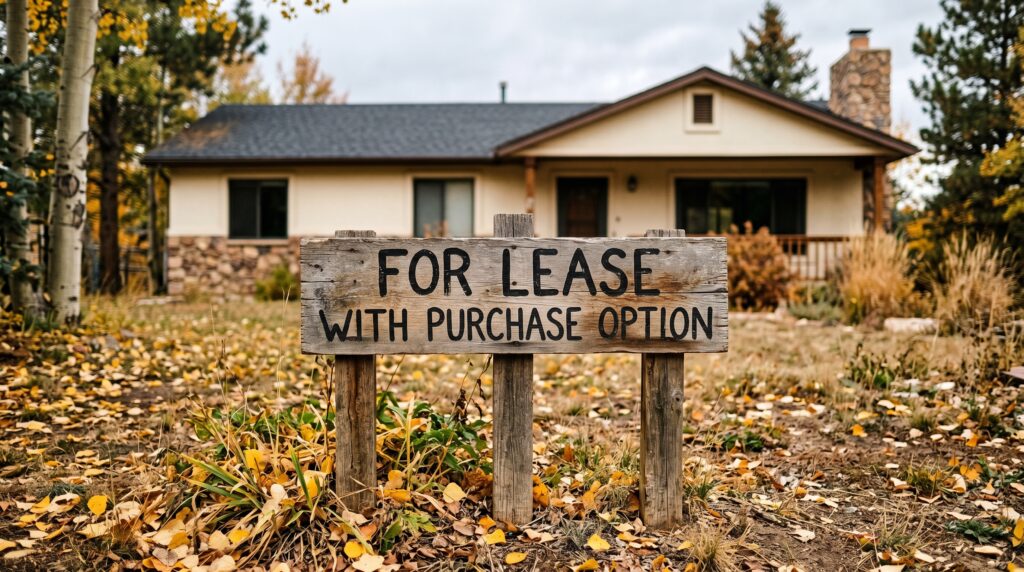
How Lease to Own Homes Work in Colorado
A Colorado lease to own transaction is really two contracts in one document: a standard residential lease plus a purchase agreement that activates at the end of the lease term. You’re simultaneously a tenant and a buyer-in-waiting, and both roles have their own obligations.
Before we get into the details, here’s the basic structure at a glance.
Colorado Lease to Own · Structure
Four parts of every lease to own deal
A Colorado lease to own is really one agreement with four moving pieces. Understand each one and the contract stops feeling like a black box.
Four Parts
- Option fee1 to 5% of home value, paid up front, usually non-refundable.
- Rent + creditMonthly rent $100 to $400 above market, with a portion credited to purchase.
- Price lockPurchase price fixed at signing, favoring you if values rise.
- Mortgage closeStandard Colorado closing at term end, with fees and credits applied.
Skip any of the four and the contract starts working against the buyer instead of for them.
Source: JROC Properties, CFPB
At the start of the deal, you pay an option fee (sometimes called option consideration) that gives you the right to buy the home later. You sign a lease for the home with a monthly rent that’s often slightly higher than market rate, with the understanding that some or all of that premium accrues as a rent credit. The purchase price is set at the moment you sign. When the lease ends, you either exercise your option and close with a traditional mortgage or walk away (losing the option fee and accumulated rent credits).
The sellers usually offering lease to own in Colorado fall into three buckets: individual owners who couldn’t sell traditionally, investors who built lease to own into their business model, and occasionally small builders looking to move inventory. Each type writes contracts differently, which is why the terms matter more than the advertised monthly payment.
The Two Types of Lease to Own Contracts
This is the single most important distinction in lease to own, and it’s where most Colorado buyers get confused. The two contract types look similar on paper but create very different obligations.
Lease-Option
A lease-option gives you the right but not the obligation to buy at the end of the lease term. If life changes (job move, relationship shift, market dip), you can walk away at the end of the term and your only loss is the option fee and any accumulated rent credits. The Consumer Financial Protection Bureau generally views lease-option as the safer structure for buyers. It’s the one most Colorado real estate attorneys recommend negotiating for.
Lease-Purchase
A lease-purchase legally obligates you to buy at the end of the term. If you can’t qualify for a mortgage when the time comes, the seller can pursue legal remedies including damages. Lease-purchase agreements favor sellers, not buyers. They’re common in Colorado’s tighter markets where sellers want a guaranteed exit, but they shift mortgage qualification risk entirely onto the tenant-buyer. Anyone considering a lease-purchase should have a Colorado real estate attorney review the contract, not just a real estate agent. The Colorado Division of Real Estate also publishes consumer guidance on creative financing arrangements worth reviewing before signing.
Here’s how the two stack up on the terms that matter most.
| Factor | Lease-Option | Lease-Purchase |
|---|---|---|
| Buyer obligation | Right to buy (optional) | Must buy (required) |
| Walk-away risk | Lose option fee + credits | Potential legal damages |
| Typical term | 1 to 3 years | 1 to 3 years |
| Who it favors | Buyer | Seller |
| Best for | Credit rebuilders, hesitant buyers | Buyers certain they’ll qualify |
Ninety percent of the time, JROC recommends Colorado buyers negotiate for a lease-option structure, not a lease-purchase. The right to walk away is worth paying a slightly higher option fee.

The Real Costs of a Colorado Lease to Own Deal
The advertised monthly rent is rarely the whole picture. Every lease to own has four money categories, and buyers should model all of them before signing.
The Option Fee
The option fee is the up-front payment that secures your right to buy later. In Colorado, option fees typically run 1 to 5% of the agreed purchase price. On a $450,000 home, that’s $4,500 to $22,500 paid at signing. This fee is usually non-refundable and almost always credited toward your down payment if you do buy. If you walk away, you lose it.
Rent Premium and Credit
Expect to pay $100 to $400 above market rent each month. A portion (sometimes all) of that premium gets credited toward your eventual down payment or the purchase price. Read the contract carefully: some Colorado lease to own agreements credit only the premium, while others credit a chunk of the full rent. The difference over a two-year term can be $10,000 or more.
The Locked Purchase Price
The price is fixed at signing. If Colorado home values rise by 8% over the two-year lease (which has happened plenty of times on the Front Range), you win. If values drop or stay flat, you may be buying a home worth less than you agreed to pay. Always negotiate the purchase price based on a current appraisal, not an optimistic future valuation.
Closing Costs at the End
At the end of the lease, you close with a standard mortgage, which means standard Colorado closing costs of 2 to 3% of the purchase price. Option fees and rent credits typically count toward your down payment, but you’ll still need 2 to 3% of the price in additional cash for closing itself. Our guide to average closing costs in Colorado covers the full breakdown.
Want a real look at the numbers?
The JROC team can model a Colorado lease to own deal against a low-down-payment mortgage and show you the actual cost difference. → Get a side-by-side comparison

When Lease to Own Makes Sense in Colorado (and When It Doesn’t)
Lease to own is a tool, not a default path. It makes sense for specific situations and is the wrong choice for others.
When It Works
Lease to own is a strong fit if you have a specific mortgage obstacle with a clear timeline to fix: a recent bankruptcy waiting for the required seasoning period, a credit score that needs 12 to 18 months of rebuilding, or self-employment income that needs two years of tax returns before a lender will count it. It’s also useful if you’ve found the exact Colorado home you want but aren’t quite ready to buy, and the seller is willing to give you a runway. Building a stronger credit profile takes time, and a lease to own can give you the keys to your future home while you do the work.
When It Doesn’t
Skip lease to own if you’re already close to qualifying for a standard mortgage. Low-down-payment options like 3% conventional, FHA, or VA often get you into the same home with less up-front cash and more flexibility. Colorado down payment assistance can sometimes cover even the option fee equivalent. Also skip it if the seller wants a lease-purchase, refuses to let you do a home inspection before signing, or won’t put the purchase price on paper. Those are red flags, not negotiating positions.

How to Find Lease to Own Homes in Colorado
Genuine lease to own listings are harder to find than regular sales in Colorado. Most legitimate deals come from three places: motivated individual sellers, small local investors, and niche platforms. Here’s where to look.
- Talk to a Colorado real estate agent who knows off-market. Agents routinely hear about owners willing to consider lease to own but who never list publicly. JROC works this channel constantly.
- Check MLS listings with long days on market. Homes that have sat for 60+ days sometimes have sellers open to creative financing. Pair this with our guide to off-market Colorado homes to widen the search.
- Contact owners of vacant rentals directly. Landlords tired of turnover sometimes convert long-term tenants into lease to own arrangements.
- Be wary of nationwide lease to own websites. Many Colorado listings on national platforms are outdated, scams, or lease-purchase agreements with predatory terms. Verify every listing with a Colorado-licensed agent before engaging.
- Work with a real estate attorney early. Before signing anything, a Colorado real estate attorney should review the contract. Legal review typically runs $300 to $600 and can save tens of thousands.
Top 5 Pitfalls to Avoid in a Colorado Lease to Own Deal
These are the exact traps JROC sees most often when reviewing lease to own contracts with Colorado buyers. Read the fine print on every one of them, and if something feels off, check with the Colorado Attorney General’s consumer protection office before you sign.
- Signing a lease-purchase without a mortgage plan. You’re locked in. If your credit, income, or rates shift in the wrong direction, you can still be held to the purchase.
- Accepting a purchase price above market. Always negotiate the price against a current appraisal, not a projected future value.
- Skipping the home inspection at the start. Treat a lease to own like a purchase, not a rental. Get a full home inspection before signing. Our home inspection red flags guide covers what to look for.
- Missing a single rent payment. Many contracts void the option to buy if you’re even one day late. Set up automatic payments.
- Assuming rent credits are guaranteed. Credits depend on on-time payments and contract compliance. One slip can zero them out.
FAQs About Lease to Own Homes in Colorado
Is lease to own legal in Colorado?
Yes. Both lease-option and lease-purchase agreements are legal in Colorado. Contracts must follow standard Colorado landlord-tenant law plus Colorado real estate contract law, which is why attorney review is strongly recommended. There is no state-specific registration or licensing requirement for sellers offering lease to own, which makes due diligence on your end even more important.
How much credit score do I need for a lease to own in Colorado?
Most Colorado lease to own sellers want to see a 580 or higher credit score, though some accept lower with a larger option fee. The more important question is: will you qualify for a mortgage at the end of the lease term? Most lease to own deals require a 620+ score to close the final mortgage, with FHA loans being the most forgiving. If your score is well below 580 today, plan on a longer lease term (24 to 36 months) to build it up.
Can I buy a Colorado home with bad credit through lease to own?
Sometimes, yes. Lease to own is one of the few paths to homeownership for buyers who can’t currently qualify for a mortgage. The key is using the lease period to actively rebuild credit, not just waiting it out. Pay down revolving debt, keep every payment on time, and avoid new credit applications during the lease. Fannie Mae’s HomeReady program and FHA loans are the most forgiving products when you’re ready, so knowing the target score for each helps you plan the timeline. Pairing that with a consultation on Colorado home loans can help you see what you’ll need to qualify for at the end of the term.
Is lease to own better than renting?
Only if you actually plan to buy. If you’re certain you want to own this specific home in this specific neighborhood, lease to own can build toward ownership in a way that a standard rental can’t. If you’re uncertain about the home, the city, or the commitment, the rent premium and non-refundable option fee make it more expensive than renting. The break-even is usually a 75% or higher probability that you’ll exercise the purchase option.
Conclusion
Lease to own homes in Colorado are a real path to ownership for buyers who need time, but only when the contract is written fairly and the buyer enters with eyes open. The right deal can give you the keys to your future home while you strengthen credit or stabilize income. The wrong deal can cost you tens of thousands in non-refundable fees on a home you never end up owning. Lease-option over lease-purchase, current appraisal over wishful pricing, and attorney review every single time.
Founded by Jami and Rocco Montana, JROC Properties brings real estate expertise and residential construction knowledge together under one roof. Serving Boulder County, Denver, Longmont, and Northern Colorado, JROC helps buyers evaluate lease to own contracts, compare them against traditional mortgage paths, and decide which route actually gets them to ownership faster. When you’re ready to sort through the numbers, the JROC team is a call away.
Find the right path to Colorado home ownership.
Work with the JROC Properties team to evaluate lease to own against standard mortgage options and choose the route that actually fits your timeline. → Start your home-buying plan