
Construction Contingency: A Guide for Smart Builders
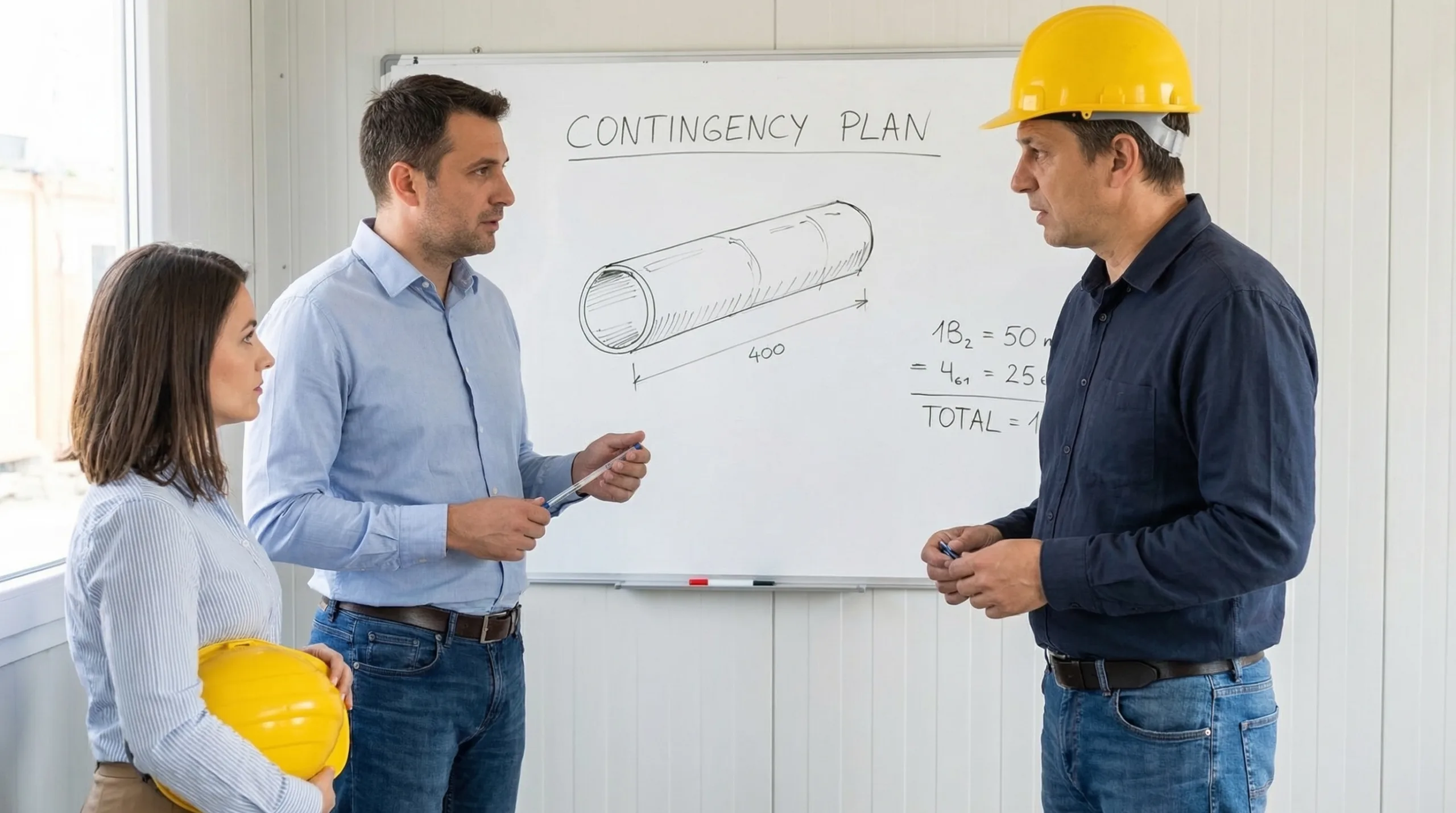
Construction projects rarely unfold exactly as planned. Materials arrive late. Weather disrupts schedules. Hidden site conditions emerge during excavation. Smart builders know these surprises aren’t exceptions but expectations, which is why construction contingency has become a non-negotiable element of project budgeting. The numbers tell a sobering story: analysis of over 16,000 projects shows only 47.9% stay on budget, with an average overrun of 65%. Even more concerning, separate research indicates 90% of projects exceed budgets by average 28%, a pattern that persists across 20 countries and seven decades of data.
These aren’t just statistics. They represent real projects that strained relationships, eroded profit margins, and forced contractors to dip into personal savings or renegotiate with frustrated clients. Whether you’re planning a home improvement project in Colorado or managing a large commercial build, the difference between projects that weather these storms and those that collapse often comes down to one factor: how well the construction contingency was planned, funded, and managed from day one.
At JROC Properties, we work with homeowners and investors across Boulder County, Denver, and Northern Colorado who face these budgeting decisions every day. With deep experience in both residential construction and real estate, our team helps clients plan smarter from the start so unexpected costs don’t derail their projects or investment returns.
Plan Your Next Build with Confidence
Understanding construction contingency is just the beginning. JROC Properties combines construction expertise with real estate insight to help you budget realistically and protect your investment. Get expert guidance from JROC →
TL;DR: Construction Contingency
Construction contingency is a dedicated financial reserve set aside for unforeseen costs during a building project. It is not padding or profit. It is disciplined planning. Industry-standard percentages range from 5-7% for simple residential builds to 10-20% for renovation and retrofit work, with some lenders now requiring 20-30% on larger loans. Contingency funds are controlled by owners, contractors, and designers depending on project delivery method. Legitimate uses include unforeseen site conditions, design modifications responding to field discoveries, and material price spikes. Illegitimate uses include scope upgrades, estimate errors, and contractor performance failures. Effective management requires systematic tracking, clear approval processes, early warning systems, and transparent communication among all stakeholders. Projects with well-managed contingency consistently outperform those that treat it as afterthought or discretionary budget.
Key Points
- Contingency Defined: Construction contingency is a reserved budget for genuinely unforeseen costs, not a slush fund for upgrades or planning errors.
- Industry Percentages: Simple residential projects need 5-7%, commercial builds 7-10%, infrastructure 10-15%, and renovations 10-20%. Recent market volatility has pushed these ranges upward.
- Three Types: Owner’s contingency covers project-level risks, contractor’s contingency covers execution risks, and design contingency handles field-driven modifications.
- Calculate Systematically: Use a risk assessment framework evaluating probability and cost impact of each threat, then aggregate with probability weighting.
- Know What Qualifies: Unforeseen site conditions, regulatory changes, and material price spikes qualify. Scope upgrades, estimate errors, and rework do not.
- Track and Monitor: Set depletion thresholds at 50% and 75%, automate alerts, and conduct milestone reviews to adjust reserves as risks evolve.
- Avoid Common Mistakes: 78% of US projects exceed budgets. Underfunding, treating contingency as discretionary, and poor documentation are the top causes.
- Get Expert Help: Work with experienced builders who understand both construction and real estate to set realistic contingencies from day one.
Table of Contents
What Construction Contingency Is (And Why It’s a Non-Negotiable)
Construction contingency meaning is straightforward: it’s a dedicated financial reserve set aside specifically to address unforeseen costs that emerge during project execution. This isn’t padding or profit hidden in the budget. A contingency fund represents a disciplined acknowledgment that construction involves inherent uncertainties no amount of planning can completely eliminate.
What is construction contingency in practical terms? It’s the buffer that allows you to respond when the structural engineer discovers unexpected soil contamination requiring remediation. It’s the cushion that absorbs cost increases when lumber prices spike 15% between estimate and procurement. It’s the reserve that covers redesign work when building inspectors require additional fire suppression systems not anticipated in the original drawings.
Construction contingency meaning extends beyond simple risk management. It signals professionalism to clients and lenders, demonstrates realistic planning rather than wishful thinking, and provides the financial flexibility to maintain quality standards even when circumstances change. Projects without adequate contingency budgeting often face impossible choices: cut quality, delay completion, or absorb losses that can threaten business viability.
How Construction Contingency Protects Your Project
Every construction project operates within a complex web of dependencies. Subcontractors coordinate schedules. Material deliveries align with installation windows. Inspections must occur at specific milestones. When something disrupts this delicate choreography, contingency costs in construction provide the financial flexibility to adapt without cascading failures.
Consider what happens when a critical mechanical system arrives with incorrect specifications. Without contingency expenses allocated, the contractor faces three bad options: delay the entire project while waiting for replacement equipment, absorb the expedited shipping costs to maintain schedule, or install substandard alternatives that create future problems. A properly funded contingency amount eliminates this dilemma, allowing you to order the correct equipment with expedited delivery while maintaining both schedule and quality.
Research shows contingency planning aligns funds to risks, enabling timely responses through data-led models that assess specific exposures like weather delays or labor shortages. This proactive approach preserves budget discipline through automated alerts when rising exposure threatens to consume reserves. The protection extends beyond immediate problem-solving to maintaining stakeholder confidence. Owners appreciate contractors who demonstrate preparedness rather than panic when challenges emerge. Lenders view adequate contingency reserves as evidence of sophisticated risk management, which can improve financing terms and approval rates.
Construction Contingency vs. Other Budget Reserves
Construction contingencies differ fundamentally from other financial reserves in their purpose, control, and usage. An allowance, for example, represents a placeholder for known but undefined items, like finish selections the owner hasn’t finalized. Everyone expects to spend allowances. A contingency fund, conversely, represents money you hope never to touch because it addresses genuinely unforeseen circumstances.
Management reserves serve a different purpose entirely. These funds, typically held by project owners, cover scope changes or enhancements requested after contract execution. If an owner decides midproject to upgrade HVAC systems or add square footage, management reserves fund those deliberate choices. Contingencies address circumstances neither party anticipated or controlled.
Escalation reserves account for predictable cost increases over time, such as inflation or market-driven price adjustments on long-duration projects. While these increases may be uncertain in magnitude, they’re expected in nature. True contingency budgeting addresses the genuinely unexpected: the concealed asbestos requiring abatement, the archaeological discovery halting excavation, or the supply chain disruption forcing material substitutions.
Understanding these distinctions prevents the common mistake of conflating different reserve types, which leads to underfunding actual contingency needs or misallocating funds when unexpected costs emerge.
Types of Construction Contingencies: Who Controls What
The types of contingency in construction vary by who holds authority over fund allocation and what risks each reserve addresses. This structure prevents disputes by establishing clear ownership and decision rights from the start. When everyone understands which party controls which contingency pool, the response to unexpected costs becomes straightforward rather than contentious.
Project delivery method significantly influences how these contingency structures operate. Design-bid-build projects typically maintain strict separation between owner and contractor contingencies, with the designer sometimes holding a third pool for design evolution. Design-build arrangements may consolidate certain contingencies under the design-builder’s control, simplifying decision-making but requiring different oversight mechanisms.
Owner’s Contingency
Owner’s contingency represents funds the project owner maintains exclusive control over to address project-specific risks and unknowns present at budget development. This reserve typically covers changes the owner initiates, unforeseen conditions affecting the overall project scope, or risk events that fall outside contractor responsibility.
The owner’s contingency serves as financial insurance against the risks owners inherently bear in construction. Regulatory changes requiring additional permitting or compliance measures draw from this fund. Utility connection costs exceeding initial estimates get covered here. Owner-driven scope modifications or upgrades come from this reserve rather than forcing contract renegotiation.
Smart owners treat this contingency as genuine reserve rather than hidden budget for desirable upgrades. The temptation to view unused contingency as available funds for enhancements undermines its protective purpose. Disciplined owners establish clear criteria for contingency access, requiring documented justification and tracking to ensure funds remain available for true emergencies throughout project duration.
Contractor’s Contingency
Contractor’s contingency operates under exclusive contractor control and responsibility, typically ranging from 5% to 10% based on project risk, difficulty, and complexity levels. This reserve addresses execution risks the contractor owns: coordination issues, minor field modifications, productivity variations, or subcontractor performance gaps.
This contingency covers circumstances like discovering that mechanical rough-ins conflict with structural elements, requiring field coordination and minor rerouting. It absorbs costs when concrete curing requires additional days due to unexpected temperature drops, extending equipment rental periods. It addresses subcontractor defaults requiring replacement firms to complete work.
Contractors often view this contingency as profit protection rather than discretionary funds. Experienced builders know that virtually every project consumes some contingency for minor adjustments and unforeseen conditions. The goal isn’t zero contingency usage but rather controlled drawdown that leaves adequate reserves for late-stage surprises.
Design Contingency
Design contingency allocation and control vary significantly by project delivery method, making this the most complex of the three primary contingency types. The fundamental purpose remains consistent: providing flexibility to resolve design issues, accommodate field conditions requiring design modifications, or address evolving project requirements during design development.
In design-bid-build delivery, remaining design contingency typically reverts to the owner to cover changes the contractor identifies during construction. Design-build contracts handle design contingency differently. Unused reserves either return to the owner’s contingency pool or transfer by contract to the contractor’s contingency for project completion.
Effective management requires phased appropriation: approximately 20% during the design phase, 30% during design development, and 50% or less during construction document development.
JROC’s deep knowledge of residential construction in Colorado means our clients benefit from contingency planning that reflects real-world conditions in Boulder County and the Denver metro area. From basement finishing projects to full custom builds, we help homeowners understand which contingency structure fits their project and risk tolerance.

How to Calculate Construction Contingency Percentage
Calculating construction contingency percentage requires balancing statistical likelihood against project-specific risk factors. While industry benchmarks provide starting points, sophisticated builders develop contingency budgets through systematic risk assessment rather than applying generic percentages across all projects. The construction contingency percentage you select directly impacts both project bankability and your ability to weather unexpected challenges without financial distress.
How to calculate contingency begins with establishing accurate baseline costs. Your contingency percentage applies to estimated project costs, so errors in base estimation compound into inadequate reserves. A 10% contingency on an estimate that’s already 20% low leaves you functionally underreserved by 12% of true costs. Start with detailed, validated cost projections before applying contingency factors.
Industry-Standard Contingency Percentages by Project Type
Current industry-standard construction contingency percentages for 2024-2026 reflect heightened awareness of cost volatility and supply chain unpredictability. Simple residential projects typically require 5-7% contingency, representing straightforward construction with established methods and predictable costs.
Commercial builds demand 7-10% contingency due to increased complexity, longer schedules, and greater coordination requirements. Complex infrastructure projects require 10-15% contingency, reflecting significant unknowns in subsurface conditions, environmental considerations, and technical challenges.
Renovation and retrofit work demands the highest contingency at 10-20% because existing conditions introduce maximum uncertainty. Hidden structural deficiencies, concealed systems, hazardous materials, and code compliance upgrades for existing buildings create cost exposure that new construction avoids.
These baseline percentages have shifted upward from historical standards. What previously required 5% contingency now often needs 7-8% minimum due to inflation volatility, supply chain disruptions, and labor cost uncertainty.
Some financial institutions have implemented more aggressive requirements, with certain lenders requiring 20-30% contingency on construction loans over $1 million.
Regional factors significantly impact contingency requirements. Remote locations may require 14-16% minimum due to challenging geological conditions, limited supplier networks, and compressed construction seasons.
For Colorado homeowners considering home additions or kitchen remodels in Denver, renovation-level contingency percentages of 10-20% are the safest starting point given the unknowns that come with older Colorado properties.
Factors That Increase or Decrease Your Contingency Needs
Project complexity and design innovation significantly influence contingency requirements. Innovative designs or technically complex elements introduce execution uncertainty that demands higher reserves. A building incorporating new construction methods or untested building systems carries greater contingency needs than one using established techniques.
Site and ground conditions represent one of the most significant variables affecting how to calculate contingency cost. Unknown subsurface conditions discovered during construction directly elevate contingency requirements. Properties with documented environmental concerns need higher reserves than clean sites.
Contract type and risk structure fundamentally alter contingency planning. Cost-plus contracts typically require higher contingencies than fixed-price agreements because they inherently carry greater cost uncertainty for owners.
Market volatility and external factors create contingency pressure independent of project specifics. Unstable material prices, labor market tightness, tariff uncertainty, and inflation significantly impact contingency levels.
Contractor qualifications and historical performance influence appropriate contingency levels. Experienced contractors with strong performance records may justify lower contingencies due to superior risk management capabilities.
Project Risk Assessment Framework
Developing a systematic risk assessment framework transforms contingency calculation from guesswork into disciplined financial planning. Start by identifying potential risk events specific to your project: concealed conditions, weather delays, permitting challenges, labor availability, material procurement issues, and design evolution.
Evaluate each identified risk along two dimensions: probability of occurrence and potential cost impact if it materializes. Use a simple scale like low, medium, and high for both factors. This creates a risk matrix helping prioritize which threats deserve the most contingency allocation.
Assign estimated costs to prioritized risks based on historical data, expert judgment, and project specifics. A risk with 30% probability of costing $50,000 contributes $15,000 to your contingency calculation.
Document your risk assessment and contingency calculation logic. This documentation justifies your contingency percentage to owners and lenders while creating a reference for monitoring risks throughout project execution.
Building or Renovating in Colorado?
JROC Properties helps homeowners across Boulder, Denver, and Longmont plan construction budgets with realistic contingency reserves. Our team understands local building conditions, permitting requirements, and contractor dynamics. Talk to our team about your project →

What Construction Contingency Funds Can (and Cannot) Cover
Construction contingency expenses exist to address specific categories of unforeseen costs while maintaining clear boundaries preventing misuse. The fundamental principle: covered expenses must be genuinely unforeseen at the time of budget development and outside the reasonable control of the party accessing funds.
Legitimate Uses of Contingency Budget
Unforeseen site conditions discovered during construction represent classic legitimate contingency expenses. Hidden underground utilities conflicting with planned foundations, unexpected rock formations, or groundwater issues all qualify.
Design modifications responding to field conditions fall within appropriate contingency usage. Material price volatility beyond normal market fluctuations can legitimately draw from contingency reserves. Unforeseen regulatory changes impacting project requirements also represent appropriate uses.
Weather-related delays exceeding statistical norms for the region and season may justify contingency access for extended overhead costs.
What Should Never Come from Contingency
Scope changes initiated by owner preference rather than necessity should never draw from contingency funds. Errors and omissions in original estimates or drawings don’t qualify as legitimate contingency expenses. Contractor performance issues, rework due to quality failures, or costs from execution errors fall outside appropriate contingency use. Maintenance, warranty, or post-completion costs never justify contingency access.
Understanding home inspection red flags before purchasing a property can help you anticipate which contingency expenses are most likely for your project, especially when buying older Colorado homes that may have hidden structural or environmental issues.
Documentation and Approval Requirements
Establishing rigorous documentation and approval processes for contingency access maintains transparency and prevents misuse. Every contingency drawdown should require written justification describing the unforeseen circumstance, explaining why base budget didn’t cover the cost, and documenting the necessity of the expense.
Approval authority should align with contingency control structures established in contracts. Tracking systems should log every contingency transaction, maintaining running balances and creating audit trails for all stakeholders.
Building Your Construction Contingency Budget: Step-by-Step Process
Contingency budgeting succeeds or fails based on the systematic rigor applied during initial budget development. Smart builders approach contingency budget construction as seriously as estimating direct costs because both determine whether projects generate profit or losses when uncertainties emerge.
Estimating Total Project Costs
Accurate total project cost estimation forms the foundation for effective contingency budgeting. Begin with detailed quantity takeoffs from complete drawings and specifications, applying current unit costs verified through recent quotes and supplier pricing. Include all direct costs: labor, materials, equipment, and subcontractor pricing. Factor in indirect costs like permits, insurance, temporary utilities, site security, and project management.
Validate your estimate through multiple methods. Compare unit costs to recent similar projects. Review completeness by cross-referencing drawings and specifications. Obtain formal quotes from key subcontractors and suppliers rather than relying solely on historical unit costs.
Applying the Right Contingency Percentage: A Worked Example
Project: $2.5M commercial office renovation in an urban setting
Base Cost Components:
- Demolition and site prep: $200,000
- Structural modifications: $500,000
- MEP systems: $800,000
- Interior finishes: $700,000
- General conditions: $300,000
Starting with the 10-20% renovation baseline, you evaluate specific factors. The building has limited historical documentation, pushing toward the higher end. The schedule is aggressive at 8 months. However, you’re using an experienced contractor with strong renovation credentials.
You determine 12% represents appropriate contingency for this risk profile: $2,500,000 x 0.12 = $300,000 total contingency budget.
Allocation Between Parties:
- Contractor contingency: $175,000 (7% of contract value) for execution risks
- Owner contingency: $100,000 (4% of project cost) for owner-driven changes and major unforeseen conditions
- Design contingency: $25,000 (1% of project cost) for field-driven design modifications
Setting Draw and Release Terms
Establishing clear terms for contingency drawdown and release prevents confusion and conflict when unexpected costs emerge. Define approval thresholds triggering different levels of authorization. Typical thresholds set fast-track approval for draws under $5,000-$10,000, with escalating approval requirements for larger amounts.
Define release terms for unused contingency at project completion. Standard contracts often specify that unused contractor contingency reverts to the owner, though some agreements allow contractors to retain a portion as incentive for effective risk management.
Managing and Tracking Contingency Throughout the Project
Construction contingency management separates projects that weather challenges successfully from those that spiral into budget crises. Research shows predictive analytics can forecast overruns 30-90 days ahead using AI models that integrate historical data, productivity metrics, and current pricing trends.
Monitoring Contingency Drawdown
Implement systems capturing every contingency transaction in real time. Establish regular reporting rhythms for contingency status updates. Calculate and monitor contingency burn rate as a percentage of project completion. If you’re 40% complete but have consumed 70% of contingency, warning signals should trigger immediate analysis.
When and How to Access Contingency Funds
Access contingency as soon as a qualified need is identified and quantified, avoiding delays that escalate costs. Follow established approval processes for every contingency access, even when time pressure tempts shortcuts. Communicate contingency access decisions clearly to all stakeholders.
Adjusting Contingency as Project Evolves
Project contingency needs change as work progresses and uncertainties resolve. Review contingency adequacy at major project milestones: design completion, permit approval, foundation completion, building enclosure, and system rough-in. Consider releasing contingency incrementally as associated risks dissipate.
JROC’s approach to construction project management emphasizes proactive contingency tracking from the first estimate through final walkthrough. For clients renovating before selling in Colorado, this discipline ensures that renovation budgets stay on track and maximize return on investment rather than eroding it through unplanned costs.
Thinking About a Colorado Renovation or Build?
JROC Properties provides home improvement ROI consulting to help you plan budgets, set realistic contingencies, and protect your investment throughout the project. Explore our home improvement ROI consulting →
Common Construction Contingency Mistakes That Cause Budget Failures
Understanding common contingency mistakes helps builders avoid costly errors. Research shows that 78% of US corporate and public projects exceed budgets, with only 31% finishing within 10% of budget. Many of these failures stem from predictable contingency planning and management errors.
Underfunding Contingency (And Its Consequences)
Setting optimistically low contingencies represents the most common and costly mistake. Underestimating reserves based on wishful thinking ignores risks like cost escalations, rework requirements, or scope gaps, leading to budget exhaustion well before project completion.
Some builders deliberately underfund contingency to make bids more competitive or to satisfy owners demanding lower total project costs. This short-term thinking backfires when unforeseen costs emerge.
Treating Contingency as Discretionary Budget
Misunderstanding contingency purpose leads to treating reserves as flexible funding for non-essential items or premature deployment. When owners view unused contingency as available budget for desirable upgrades, when contractors tap contingency to offset low bid prices, the reserve disappears long before genuine unforeseen costs emerge.
Poor Documentation and Tracking
Inadequate documentation and tracking leads to disputes, misunderstandings, and loss of financial control. Without clear records of when contingency was accessed, for what purpose, and under whose authorization, stakeholders lose confidence in how reserves are managed.
Not Planning for Contingency Reconciliation
Failing to plan for contingency reconciliation at project completion creates confusion and potential disputes over remaining funds. Clear reconciliation planning includes establishing closeout procedures for verifying final contingency balances and documenting disposition according to contract terms.

5 Smart Rules for Construction Contingency Success
Whether you’re a first-time builder or a seasoned investor, these rules will keep your project financially protected:
- Rule 1: Calculate, Don’t Guess. Use risk-based calculation, not flat percentages. Assess your project’s unique threats and allocate accordingly.
- Rule 2: Define Who Controls What. Separate owner, contractor, and design contingency pools with clear control and approval processes.
- Rule 3: Set Early Warning Triggers. Set alerts at 50% and 75% depletion. If you’re burning reserves faster than progress, stop and reassess.
- Rule 4: Document Every Draw. Log every drawdown with written justification, cost documentation, and formal approval. No exceptions.
- Rule 5: Plan for What’s Left Over. Unused contingency isn’t wasted money. It’s proof that risk management worked. Clarify disposition terms in your contract upfront.
What Happens to Unused Contingency Funds
Unused contingency at project completion represents successful risk management rather than wasted budget. Standard construction contracts address unused contingency primarily through provisions tying contractor-controlled reserves to their exclusive use within guaranteed maximum price structures, with remainder typically reverting to owners unless shared savings provisions specify otherwise.
Smart builders clarify contingency disposition during contract negotiation rather than addressing it when unused funds exist and positions have hardened.
Construction Contingency Best Practices
Implementing sophisticated contingency management practices separates industry leaders from builders who view contingency as afterthought. Research shows that contingency planning using data-led models to assess risks with probability-weighted costs preserves discipline through automated alerts on rising exposure.
Technology Tools for Contingency Management
Modern construction management software transforms contingency tracking from manual spreadsheets into automated, real-time visibility. Procore leads in financial management depth for firms prioritizing comprehensive budget oversight. Kolibrx emphasizes accessibility and cost-efficiency for mid-size builders. Projul targets all-in-one simplicity at $4,788 annually for small and mid-size contractors.
Early Warning Systems for Contingency Depletion
Establishing formal early warning triggers for contingency thresholds creates proactive rather than reactive management. Define specific depletion levels like 50% or 75% usage to activate notifications. Develop predefined communication plans with escalation protocols. Implement visual dashboards and real-time reporting tools providing transparent tracking.
Communication Protocols Between Stakeholders
Effective communication among stakeholders stands as critical success factor for contingency management. Weekly or biweekly contingency status updates during project meetings keep all parties informed. Formal written communication accompanies every contingency access request. Monthly financial reports include detailed contingency sections.
Conclusion
Construction contingency represents sophisticated risk management, financial discipline, and collaborative planning that separates successful projects from costly failures. The difference between finishing on budget and joining the majority that overrun often traces to how seriously builders approach contingency planning, management, and communication throughout project lifecycles. Smart builders recognize that contingency isn’t overhead to minimize but rather insurance providing the flexibility to deliver quality projects despite inevitable uncertainties.
Founded by Jami and Rocco Montana, JROC Properties brings together residential construction expertise and real estate knowledge under one roof. Serving Boulder County, Denver, Longmont, and Northern Colorado, our team helps homeowners and investors navigate construction budgeting with the transparency, communication, and discipline that keeps projects on track. Whether you’re planning a home improvement project or evaluating a real estate investment in Denver, JROC’s hands-on approach ensures your contingency planning reflects reality, not wishful thinking.
Ready to Build or Renovate with Confidence?
JROC Properties provides construction expertise and real estate guidance throughout Boulder County, Denver, and Northern Colorado. Let us help you plan a project that stays on budget and protects your investment. Get started with JROC Properties →